The Duravant family of operating companies serve the food processing, packaging and material handling segments.

Choosing the 2026 best Food Boxes requires more than comparing prices and printed designs. Global buyers must examine food safety, structural strength, moisture resistance, recyclability, and shipping efficiency. A box that performs well in a dry warehouse may fail beside chilled produce or oily takeaway meals. No box wins everywhere.
The United Nations Environment Programme reported that 1.05 billion tonnes of food were wasted in 2022. Better packaging cannot solve food waste alone, but suitable protection can reduce crushing, leakage, contamination, and premature spoilage. The FAO also continues to identify significant food losses between production and retail, making packaging performance commercially important. These findings support a practical buying question: does the box protect more food than the environmental burden it creates?
Packaging scientist Susan E. M. Selke describes packaging as “the science, art, and technology of enclosing and protecting products for distribution, storage, sale, and use.” Her definition remains useful for international sourcing. It connects design with real handling conditions, not just appearance. Smithers’ packaging forecasts also point toward continuing growth in sustainable materials and fiber-based solutions through the decade. Yet recycled content, barrier coatings, and compostability claims require careful verification. They are not automatically equivalent.
This guide compares Food Boxes for global buyers through measurable criteria, including compression strength, food-contact suitability, stackability, minimum order quantities, and total landed cost. It also considers regional recycling systems and evolving packaging requirements. Some conclusions may remain imperfect. Supplier data can be incomplete, and laboratory results cannot reproduce every delivery route. Careful testing is still necessary.
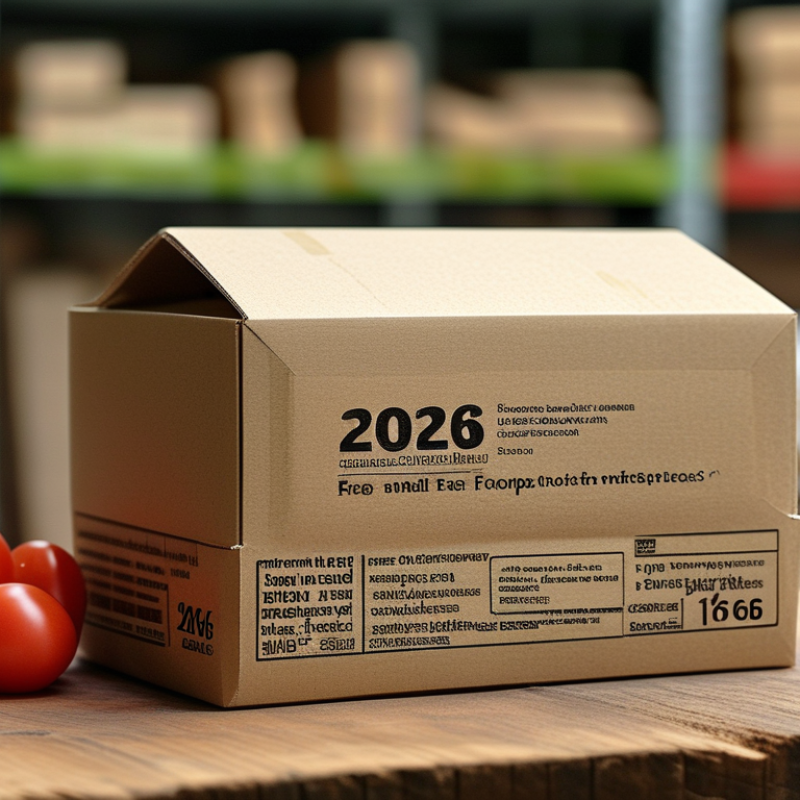
Food boxes are containers designed to protect, organize, and present food during storage, delivery, and retail display. They may hold dry goods, frozen products, fresh produce, or ready-to-eat meals. For global buyers, the box is more than a simple carton. It becomes part of product safety.
A strong food box should match the product’s weight, moisture level, temperature, and travel distance. In practical sourcing reviews, weak corners and poor inner coatings often cause avoidable damage. Dry foods may need moisture-resistant paperboard, while frozen items require packaging that stays stable at low temperatures. Labels matter too. Clear information about ingredients, allergens, origin, quantity, and handling supports smoother international trade. Local import rules still differ, so buyers should verify requirements before production.
Global buyers also need boxes that fit pallets efficiently and reduce empty space. Better dimensions can lower freight costs and limit movement inside the carton. Food-contact materials should come with reliable safety documentation, not vague promises. Sustainability deserves careful checking. Not every recycled material suits direct food contact, and a recyclable box may still create waste through excessive layers. That is an easy point to miss. Buyers can request samples, test compression strength, inspect print quality, and review documentation before placing large orders. A box may look excellent in a catalog but perform poorly after humidity, stacking, and long-distance handling.
Food boxes are designed to protect products from temperature changes, moisture, impact, and contamination during storage and international transport. The chart shows common temperature targets that help global buyers choose between insulated, refrigerated, or standard food boxes.
Reference temperature targets commonly used in food logistics. Actual requirements vary by product, destination regulations, transit time, and approved handling procedures.
In 2026, food boxes come in more forms than many global buyers expect. Corrugated boxes remain practical for dry foods, snacks, and bulk shipments. Their fluted layers help absorb shocks during long-distance transport. Folding cartons suit cereals, tea, baked goods, and smaller retail portions. They are lightweight, printable, and easy to store before filling.
Rigid food boxes offer a stronger presentation for gift sets, premium confectionery, and carefully arranged products. Insulated boxes support chilled or frozen foods by slowing temperature changes during delivery. Some include liners, cooling packs, or moisture-resistant layers. Molded pulp boxes are also gaining attention for produce, eggs, and delicate items. They provide cushioning, although they may not perform well in wet conditions.
I have found that the best choice depends on food weight, shelf life, humidity, stacking pressure, and transport time. Food-contact surfaces should be checked for suitable materials, inks, coatings, and adhesives. Buyers should request migration testing and review destination-market packaging rules before production. A box can look excellent and still fail after condensation appears. No box is perfect. My own preference is to test filled samples through vibration, compression, and cold storage. That extra step often reveals weak corners or loose inserts. Custom partitions, tamper-evident closures, and clear labeling can improve handling without making the package unnecessarily complex.
| Food Box Type | Common Material | Best-Suited Foods | Main Protection | Typical Temperature Range | Recycling Profile | Global Buyer Considerations |
|---|---|---|---|---|---|---|
| Folding Carton Box | Paperboard, often coated or laminated | Dry foods, cereals, snacks, confectionery, tea and frozen products | Good printability, stacking and light protection; limited moisture resistance unless coated | Ambient use; some grades are suitable for chilled or frozen applications | Generally recyclable when free from unsuitable coatings, heavy food residue or mixed materials | Confirm food-contact suitability, coating requirements and local paper-recycling rules |
| Corrugated Shipping Box | Fluted paperboard with liner papers | Bulk food packs, subscription deliveries, produce and secondary transport packaging | High stacking strength and cushioning; protection depends on flute and board grade | Ambient distribution; moisture-resistant grades may support chilled logistics | Widely recyclable through paper and cardboard collection systems when clean and dry | Select board strength, box dimensions and moisture resistance according to route and load weight |
| Molded Fiber Food Box | Pressed recycled paper fiber or virgin plant fiber | Takeaway meals, bakery items, produce and food-service portions | Rigid shape, moderate impact resistance and useful heat tolerance; moisture performance varies | Usually ambient or hot-food service; verify suitability for chilled, frozen or reheating use | Often recyclable or compostable only when the coating and local facilities support that claim | Check certification, barrier coating, leakage resistance and destination-country disposal infrastructure |
| Paperboard Meal Box | Food-grade paperboard with a water- or grease-resistant treatment | Ready meals, noodles, fried foods, sandwiches and bakery products | Lightweight structure with moderate grease and moisture resistance | Hot or ambient service; actual temperature limits depend on coating and closure design | Recyclability may be reduced by plastic or aluminum barriers and food contamination | Verify migration testing, grease resistance, ventilation and local labeling requirements |
| Insulated Shipping Box | Corrugated outer box with paper, fiber or foam insulation | Chilled food, frozen food, meal kits and temperature-sensitive groceries | Slows heat transfer; does not independently maintain a safe temperature without suitable cold packs and handling | Designed for chilled or frozen transport; validated duration is route-specific | Recycling depends on whether insulation can be separated from the corrugated outer box | Use transit trials and temperature data; consider customs clearance, delivery time and pack-out volume |
| Rigid Plastic Food Box | Food-contact plastic such as polypropylene or polyethylene terephthalate | Fresh produce, deli foods, sauces, prepared meals and reusable food storage | Strong moisture barrier, product visibility and consistent shape | Ambient, chilled or frozen use depending on resin, lid and test results | Some resin types are recyclable, but acceptance varies substantially by country and municipality | Check resin identification, reuse claims, chemical compliance and restrictions on recycled content |
| Flexible Retort Box or Pouch | Multi-layer flexible laminate with heat-sealable layers | Shelf-stable meals, sauces, soups and wet foods processed by retort | Strong barrier against oxygen and moisture; suitable only when the complete package is process-validated | Commercially sterilized for shelf-stable distribution; processing conditions must be validated | Multi-material structures are generally more difficult to recycle than mono-material packaging | Require retort testing, seal-integrity testing, shelf-life validation and destination-market compliance |
| Produce Ventilated Box | Corrugated board, molded fiber or rigid reusable plastic | Fruit, vegetables, mushrooms and other fresh agricultural products | Ventilation, stacking and airflow management; limited liquid resistance unless treated | Usually chilled or ambient distribution according to the produce and supply chain | Fiber formats are commonly recyclable; reusable plastic formats require return and washing systems | Match vent openings, pallet pattern, humidity exposure and pack weight to the product |
| Bakery Window Box | Paperboard with a transparent plastic or cellulose-based window | Bread, cakes, pastries, cookies and gift-style bakery products | Product visibility and light structural protection; limited barrier performance | Primarily ambient storage; humidity control depends on the product and closure | Usually requires separating the window from the paperboard; local rules determine acceptance | Confirm grease resistance, food-contact declaration, window material and disposal instructions |
Note: Performance, temperature suitability, food-contact compliance and recyclability depend on the exact material structure, coating, closure, food type and destination-market regulations. Buyers should request technical specifications and conduct transport, shelf-life and migration testing before commercial use.
A practical comparison starts with the food. Dry snacks need moisture resistance, while chilled meals need stronger barriers and reliable seals. Paperboard feels light and presents a clean surface for printing. However, it can soften when exposed to oil or condensation. Corrugated board offers better protection during long-distance shipping. Its larger structure may increase storage space and freight costs. Weight matters.
Choose the smallest box that protects the product without crushing it. Measure the food after filling, not before. Leave enough room for seals, labels, and natural movement. A tight fit can damage delicate items. An oversized box wastes material and allows products to shift. Test several internal layouts with real samples. Small changes can reduce empty space significantly.
Design should support handling, opening, and clear product information. Easy-open tabs help buyers, but weak tabs may tear during transport. Flat-packed formats save warehouse space, although assembly can slow packing lines. Check whether local recycling systems accept the chosen material. A recyclable box is less useful when nearby facilities cannot process it. Food-contact requirements also differ by market, so documentation matters.
Compare compression strength, barrier performance, unit cost, and delivery conditions together. Request samples before placing a large order. Test them in humidity, stacking, and ordinary handling. Early results may look convincing, yet real distribution can reveal weak corners. That uncertainty deserves attention.
Test before scaling.
Food boxes should meet the safety rules of their destination market, not just look attractive. Materials must be suitable for direct food contact and resist harmful chemical migration. Requirements can differ across the European Union, North America, Asia, and the Gulf region. Buyers should request compliance documents, test reports, and batch information from suppliers. A box for hot soup needs stronger moisture resistance than one for dry biscuits. Cold changes everything.
Tips: Check the box after filling, sealing, stacking, and refrigeration. Confirm that inks, adhesives, coatings, and recycled fibers are approved for the intended use. Review local labeling rules, including allergens, ingredients, expiry dates, and recycling marks. Ask for evidence instead of trusting general claims. Small details matter.
Sustainability standards also vary by market. Some regions prioritize recyclable mono-materials, while others accept certified fiber packaging with specific coatings.
The box should protect food during transport without creating unnecessary waste. Test compression strength, odor transfer, leakage, and temperature performance before placing a large order.
A practical trial may reveal weak corners or warped lids. That is inconvenient, but useful. Packaging teams should keep test records and review them when regulations, suppliers, or food products change. No single box design works everywhere, and assuming otherwise can become an expensive mistake.
Choosing a food box supplier for global trade requires more than comparing unit prices. The supplier should understand food-contact safety, export documentation, and regional packaging rules. Ask for material specifications, migration test reports, and batch traceability. A reliable supplier can explain where paper, coatings, adhesives, and inks come from. Vague answers deserve caution.
Packaging performance matters during long journeys. Test boxes with frozen, oily, dry, or moisture-sensitive products. Place sample cartons on a pallet, expose them to humidity, and check stacking strength after several days. Confirm box dimensions against container plans. Small size differences can create costly empty space. Also review minimum order quantities, lead times, payment terms, and delivery responsibilities clearly.
A supplier’s factory process reveals practical experience. Request a recent quality audit, production photos, and a sample inspection record. Check whether damaged boxes are measured by a defined standard. Communication speed matters too, especially when customs documents change. I once underestimated humidity during storage, and a seemingly strong carton softened quickly. That mistake changed how I evaluate coatings and warehouse conditions. No supplier is perfect, and test results can still miss real-world handling. Leave room for independent inspection and a small pilot shipment before scaling.