The Duravant family of operating companies serve the food processing, packaging and material handling segments.
Choosing among the 2026 Top Painting Line Suppliers requires more than comparing catalog prices. Global buyers need verified engineering, stable production, and practical after-sales support. A reliable Painting Line should match the product, coating chemistry, factory space, and regional safety requirements.
Dr. Markus Keller, an industrial coating-line engineer with more than twenty years of factory experience, explains: “The best line is not the fastest one; it is the one that stays consistent every day.” This principle matters on the shop floor. A conveyor should move smoothly, without sudden vibration. Spray booths should maintain balanced airflow. Ovens must hold an even temperature across every rack. Small weaknesses become expensive when production runs continuously.
This guide examines leading suppliers through a buyer’s practical lens. It considers pretreatment quality, conveyor design, curing performance, automation, energy use, maintenance access, and commissioning support. Supplier experience also matters. Ask for comparable installations, measurable efficiency data, spare-parts plans, and operator training records.
Not every impressive proposal is a suitable investment. Sometimes, the cheaper line creates higher energy and maintenance costs later. That is easy to miss.
Buyers should also challenge their own specifications. Are the projected volumes realistic? Is future expansion possible? Have local technicians reviewed the control system? These questions may feel inconvenient, but they expose weak assumptions before contracts are signed. The following supplier overview aims to support careful, evidence-based decisions for manufacturers seeking dependable finishing capacity in 2026.
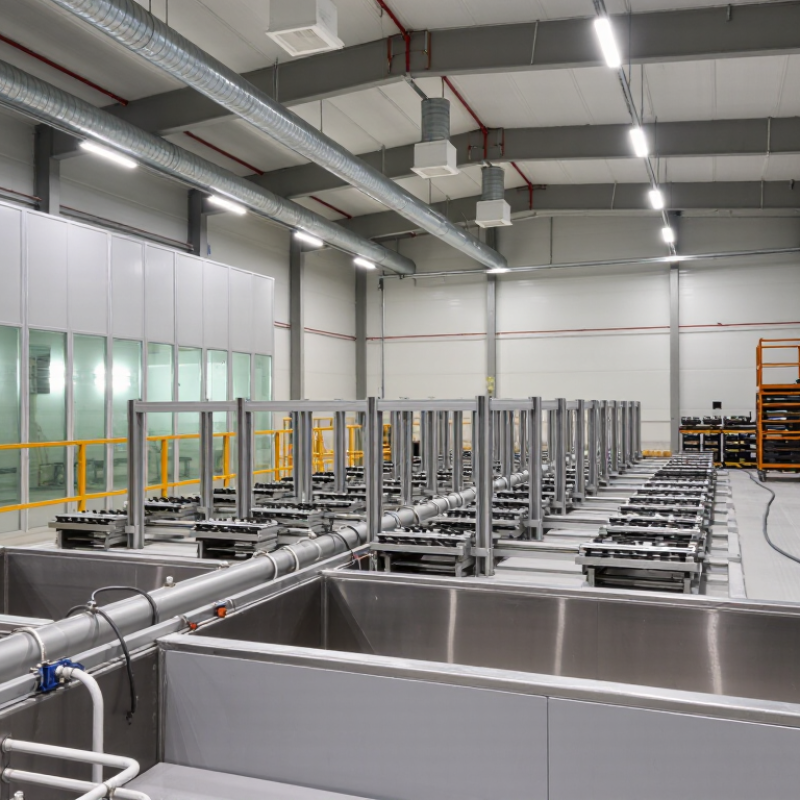
Painting line suppliers generally fall into four categories: turnkey integrators, coating equipment specialists, automation providers, and retrofit service companies. Turnkey firms design conveyors, spray booths, curing ovens, and wastewater controls together. Equipment specialists focus on powder, liquid, or electrophoretic coating systems. Automation providers add robots, PLC control, vision inspection, and production tracking. Retrofit suppliers improve existing lines without replacing every machine.
Core technologies now include electrostatic spraying, powder recovery, low-temperature curing, and heat-efficient ovens. Grand View Research projects the global powder coatings market to expand at about 6.6% annually from 2024 to 2030. Fortune Business Insights also reports steady growth in industrial coating demand through 2032. These figures support investment, but they do not guarantee quick payback. Energy prices, product geometry, labor skills, and local compliance can change the result. That matters.
Tips: Request measured transfer efficiency, oven energy use, line-speed records, and maintenance data. Ask for references using similar metals and production volumes. A supplier promising zero defects sounds attractive, but real factories need controlled variation, clear alarms, spare parts, and trained operators. Validate powder recovery performance with your actual parts. Small samples can mislead. Include cybersecurity for connected controls, and check whether the supplier supports regional service response.
2026 Top Painting Line Suppliers for Global Buyers
How to Evaluate Painting Line Manufacturers for Global Projects
Choosing a painting line manufacturer requires more than comparing quoted prices. Study proven experience with your coating type, product size, and production volume. Ask for references from similar climates and factory conditions. A reliable supplier should explain pretreatment, drying, spraying, curing, filtration, and wastewater controls clearly. Vague answers deserve attention.
Request layout drawings, energy estimates, cycle-time calculations, and a clear equipment list. Check whether engineers can adapt conveyors, booths, ovens, and control systems to your site. Review safety documents and applicable certifications with an independent specialist. Factory acceptance testing should use representative parts, not only perfect samples. Small defects can reveal larger process weaknesses.
Tips: Visit an operating installation when possible. Watch color changes, cleaning time, overspray handling, and operator access. Speak with maintenance staff, not only sales teams. Confirm spare-part availability, remote support hours, training, and response times in writing. Payment milestones should match inspected progress. A low initial offer may become expensive after design changes, shipping, commissioning, and energy upgrades. I have seen attractive proposals fail because local utilities were never checked.
How to Evaluate Painting Line Manufacturers for Global Projects
The benchmark uses a weighted procurement scorecard for global painting-line projects. Safety and compliance receive the highest weighting, followed by energy efficiency, production performance, automation, after-sales support, and delivery capability. Buyers can adjust these weights according to product type, local regulations, factory scale, and project schedule.
2026 Top Painting Line Suppliers for Global Buyers will compete through practical automation, not impressive brochures. Buyers should inspect pretreatment tanks, spray booths, curing ovens, conveyors, and filtration systems as one process. The International Federation of Robotics reported 541,302 industrial robot installations worldwide in 2023. That figure supports automated spraying, but it does not guarantee better coating quality.
A capable line should combine programmable spray guns, automatic gun cleaning, viscosity monitoring, and oven temperature mapping. These controls reduce overspray and help maintain consistent film thickness. Grand View Research valued the global powder coatings market at approximately USD 13.1 billion in 2023, with continued growth expected through 2030. This trend increases demand for efficient powder recovery and stable curing performance. Small details matter. A poorly sealed booth can waste material every shift.
Customization should match the buyer’s floor space, product geometry, coating chemistry, and local safety requirements. Modular conveyors may support frequent product changes, while fixed layouts often suit high-volume production. Suppliers should provide test panels, energy estimates, maintenance schedules, and documented acceptance criteria. Remote diagnostics can shorten downtime, although unreliable network access remains a weakness in some regions. I would also question overly precise payback promises. Actual savings depend on operator training, color changes, ventilation loads, and rejected parts. Pilot testing is still the safer decision.
International buyers should evaluate painting line suppliers beyond price and production speed. A reliable supplier explains which standards apply in the destination market. Documents may include conformity assessments, electrical safety files, risk evaluations, and material compliance records. Requirements differ between regions, so copied certificates are not enough. Ask for recent project references and clear testing procedures.
Installation quality often determines the line’s real performance. Experienced suppliers provide layout drawings, utility lists, foundation requirements, and commissioning schedules before shipment. During installation, engineers should check airflow, curing temperature, conveyor speed, grounding, and emergency stops. Factory acceptance testing can expose problems early. Site acceptance testing confirms whether the system works under actual operating conditions. Small details matter here.
After-sales support needs measurable commitments. Buyers should confirm spare-parts availability, remote diagnosis methods, training hours, and response times. A useful service team can explain alarms with photos, manuals, and simple checklists. Language support also reduces mistakes. One weakness deserves attention: many proposals promise “lifetime support” without defining it. That wording sounds reassuring, but it is difficult to verify. A stronger agreement states warranty limits, service rates, software access, and escalation contacts. Suppliers should also review performance after commissioning, because the original design may need adjustment once operators use the line daily.
2026 Top Painting Line Suppliers for Global Buyers
Cost Factors and Supplier Selection Criteria for 2026
Buying a painting line requires more than comparing equipment prices. The initial quotation may cover booths, conveyors, ovens, and control panels. It may exclude installation, factory acceptance testing, shipping, spare parts, and operator training. Energy consumption also matters. A curing oven running twelve hours daily can significantly affect annual operating costs. Labor, filter replacement, compressed air, wastewater treatment, and scheduled maintenance should enter the same calculation.
During supplier evaluations, request a cost breakdown with clear assumptions. Ask for production capacity, coating thickness, temperature uniformity, and expected line availability. Practical evidence is stronger than attractive brochures. Review test reports, reference installations, safety documentation, and service response procedures. A supplier should explain how the line handles color changes, oversized parts, dust control, and future expansion. Their answers reveal engineering depth.
Tips: Compare total ownership cost over five years, not only the purchase price. Visit a working installation if possible. Check whether local technicians can support commissioning and urgent repairs. Request sample panels before signing. A cheaper line may consume more energy or require frequent manual adjustments. I have seen buyers overlook this detail. It became expensive later. Also, supplier promises should be written into measurable acceptance criteria, including output, coating quality, noise, and delivery milestones. Vague terms create avoidable disputes.
| Supplier Type | Typical Supply Region | Painting Line Scope | Indicative Equipment Cost (USD) | Typical Lead Time | Best-Fit Applications | Key Cost Drivers | Technical Support | Selection Priority |
|---|---|---|---|---|---|---|---|---|
| Turnkey Powder-Coating Line Integrator | East Asia; Southeast Asia; Eastern Europe | Pre-treatment, drying oven, powder booth, curing oven, conveyors and control system | $150,000–$650,000 | 4–8 months | Metal furniture, shelving, appliances, agricultural parts and general fabrication | Line length, oven size, conveyor load, booth automation, filtration and energy efficiency | Remote commissioning plus optional on-site installation | High |
| Automated Liquid-Paint System Integrator | Western Europe; North America; East Asia | Cleaning, spray booths, flash-off zones, drying or curing ovens, pumps and robotics | $300,000–$2,000,000 | 6–12 months | Automotive components, machinery, transport equipment and industrial enclosures | Number of spray robots, paint chemistry, booth airflow, VOC controls and oven configuration | Application trials, process engineering and production ramp-up support | High |
| Electrocoat (E-Coat) Line Supplier | Western Europe; North America; China | Multi-stage pre-treatment, immersion tank, rectifier, ultrafiltration, rinse system and oven | $1,500,000–$10,000,000 | 10–18 months | Automotive parts, heavy equipment, chassis, fasteners and corrosion-critical steel components | Tank volume, bath chemistry, rectifier capacity, filtration, wastewater treatment and oven capacity | Process validation, bath management training and scheduled service | Very High |
| Compact Batch Powder-Coating Supplier | South Asia; Southeast Asia; Latin America | Batch oven, manual booth, basic recovery unit, preparation equipment and trolley system | $40,000–$180,000 | 2–5 months | Small and medium job shops, low-volume parts and mixed product batches | Chamber dimensions, heating source, booth filtration, material handling and local fabrication content | Standard documentation and remote technical assistance | Medium |
| High-Volume Conveyor Painting Line Supplier | Western Europe; Japan; South Korea; North America | Continuous pre-treatment, conveyorized spray booths, flash-off, multi-zone ovens and automated controls | $1,000,000–$6,000,000 | 9–16 months | Large-volume appliance, automotive, HVAC and industrial component production | Throughput, conveyor speed, line footprint, automation level, oven fuel and emission-control requirements | Full engineering, factory acceptance testing and on-site commissioning | Very High |
| Coil-Coating Line Engineering Supplier | Western Europe; North America; East Asia | Uncoiler, strip cleaning, chemical treatment, coating heads, ovens, cooling and recoiler | $3,000,000–$15,000,000+ | 14–24 months | Pre-painted steel, aluminum sheet, roofing, building panels and appliance sheet | Strip width, line speed, coating method, oven technology, tension control and quality inspection systems | Process design, trial production and long-term service contracts | Very High |
| Robotic Spray-Cell Supplier | North America; Western Europe; East Asia | Industrial robots, spray equipment, part-positioning system, safety enclosure and local exhaust | $250,000–$1,200,000 | 5–10 months | Repeatable components, complex geometries and operations requiring reduced manual labor | Robot count, payload, number of axes, paint technology, vision systems and safety category | Programming, operator training and preventive-maintenance support | High |
| Regional Custom Fabrication Supplier | Middle East; Africa; Latin America; South Asia | Locally fabricated booths, ovens, tanks, conveyors and basic electrical controls | $80,000–$500,000 | 3–8 months | Price-sensitive projects, replacement lines and applications with local installation capability | Steel prices, imported components, fabrication standard, burner or heater type and automation scope | Local installation with variable engineering depth | Medium |
| Energy-Efficient Retrofit Supplier | Global; strongest availability in Europe and North America | Oven upgrades, heat recovery, VFDs, burner replacement, booth filtration and control modernization | $50,000–$1,000,000 | 2–9 months | Existing lines requiring lower gas or electricity consumption and improved production stability | Existing equipment condition, retrofit compatibility, control architecture and required downtime | Site audit, energy assessment and performance verification | High |