How to Choose the Best Farm Land Tractor for Your Needs?
Choosing the right Farm Land Tractor is essential for maximizing your agricultural efficiency. With many options on the market, it can feel overwhelming. Each tractor model comes with unique features, designed for specific tasks and land conditions.
Understanding your needs is crucial. Do you require a powerful tractor for heavy-duty work? Or do you need something more compact for smaller tasks? Evaluating your land type and size will help narrow down your choices. Key factors include engine power, implement compatibility, and fuel efficiency.
It's easy to overlook power requirements or necessary attachments. Many beginners make this mistake. Research is vital to match a tractor with your farming goals. Seek advice from experienced farmers and professionals. Their insights can help you avoid costly missteps. In the end, finding the best Farm Land Tractor is a journey of discovery. You must weigh your options carefully to achieve the best results in your farming endeavors.
Understanding Different Types of Tractors for Farming Needs
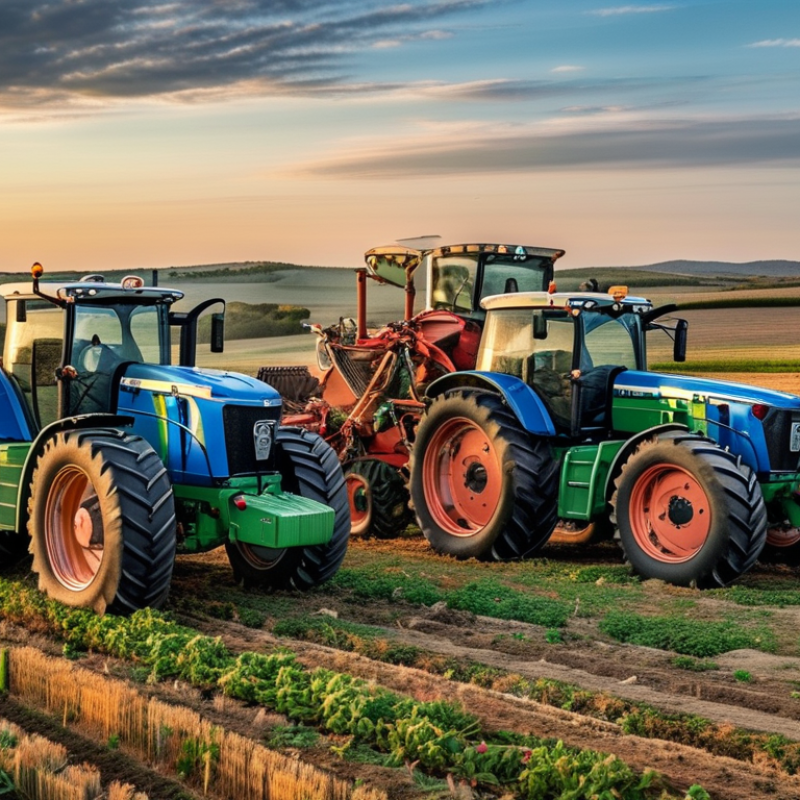
When selecting the best farm land tractor, understanding the various types available is crucial. Tractors can be categorized into utility, row crop, and specialty types. Utility tractors are versatile and suited for general tasks such as tilling and hauling. Row crop tractors excel in maneuverability and power for tasks like planting and harvesting. Specialty tractors are designed for specific uses, such as vineyards or orchards, where precision is vital.
According to a report by the American Society of Agricultural and Biological Engineers, over 40% of farms now rely on tractors that range from 45 to 100 horsepower. This horsepower range offers a balance between power and efficiency, making it suitable for most farming needs. However, choosing the wrong type may lead to inefficiencies. A tractor that’s too powerful can increase fuel consumption and operational costs. Meanwhile, an underpowered tractor might struggle with demanding tasks, leading to delays.
Farmers should also consider whether to opt for a two-wheel or four-wheel drive. The choice often depends on soil conditions and terrain. Four-wheel drive models provide better traction and stability on uneven ground. However, they can be more expensive and may require more maintenance. Each option presents trade-offs, and farmers must evaluate their specific requirements while being cautious of maintenance expenses. Balancing these factors ensures optimal productivity without unnecessary costs.
Assessing Horsepower and Engine Performance for Your Tasks
When choosing a tractor for farming, assessing horsepower is crucial. The right horsepower can directly influence the effectiveness of your tasks. According to the American Society of Agricultural and Biological Engineers, a tractor should ideally provide 15 to 20 horsepower per foot of implement width for optimal performance. For instance, a 5-foot implement requires a tractor with at least 75 horsepower to ensure efficiency.
Engine performance also plays a vital role. Look for tractors with engines that deliver consistent torque across a range of RPMs. A study by the Agricultural Research Service found that higher torque levels contribute to better fuel efficiency and power delivery. This means less downtime and more productive work hours on your farm.
Many farmers overlook the importance of engine reliability. While a high horsepower rating is appealing, it must be accompanied by durable engineering and quality materials. Consider tractors that are built for longevity and demand regular maintenance checks to sustain performance. Remember, the best tractor is not always the most powerful one. It's one that aligns with your specific farming needs in real-world conditions.
Evaluating Size and Weight Considerations for Agricultural Land
When selecting a tractor, size and weight are critical factors to consider. A larger tractor can handle heavy loads and tougher terrain. However, it may not be suitable for smaller plots or delicate crops. It’s essential to analyze the size of your land and the extent of your agricultural activities. Additionally, a compact tractor might be more efficient for smaller farms, as it allows for easier maneuverability and access to tight spaces.
Weight plays a significant role in a tractor's performance. A heavier tractor provides better traction, especially in muddy or uneven fields. Yet, too much weight can cause soil compaction, which negatively affects crop health. It’s a balancing act. You need to determine the appropriate weight that offers stability without damaging the land. Many farmers overlook this aspect and face challenges later on, like reduced yield or increased soil degradation.
Evaluating these factors deeply enhances decision-making. Understanding the specific needs of your farm can prevent costly mistakes. Often, farmers rush through this, missing the details that really matter. Taking the time to assess size and weight can lead to better long-term outcomes. This might mean testing different tractors before making a final choice.
Features and Attachments to Enhance Tractor Versatility
Selecting the right features and attachments for a farm land tractor can greatly enhance its versatility. According to a report by the American Society of Agricultural and Biological Engineers, the right attachments can increase a tractor's efficiency by over 25%. This efficiency is crucial, especially during peak seasons when time is valuable. Common attachments such as plows, seeders, and tillers offer diverse functionalities, allowing farmers to switch tasks quickly.
Moreover, some tractors can be equipped with hydraulic systems. These systems can handle heavy loads and enable the use of larger, more efficient attachments. Research indicates that tractors with advanced hydraulic systems may reduce labor hours by as much as 30%. However, it's vital for farmers to assess their specific needs before investing in attachments. Not every attachment may suit every farm type. Choosing poorly can lead to wasted resources and inefficiency.
The market offers numerous choices, but not all are reliable. A comprehensive understanding of your field's requirements is necessary. Ensure that any attachment complements the tractor's capabilities. Seek advice from agricultural experts to make informed decisions. This expertise can save money and enhance productivity over time. Remember, effective farming relies on both the right equipment and strategic planning.
How to Choose the Best Farm Land Tractor for Your Needs? - Features and Attachments to Enhance Tractor Versatility
| Feature/Attachment | Description | Benefits | Ideal Use |
| Front Loader | A hydraulic implement mounted on the front of the tractor for lifting and moving materials. | Increases versatility for handling tasks such as loading, lifting, and transporting. | Ideal for lifting heavy loads such as bales, gravel, or sand. |
| Rotary Tiller | A tilling attachment that helps break up soil and prepare it for planting. | Improves soil aeration and promotes better crop growth. | Best for preparing garden beds or large fields. |
| Plow | An implement used to turn and break up the soil before planting. | Prepares the field for planting crops and aids in weed control. | Ideal for large scale tillage and farming operations. |
| Seeder | An attachment used to sow seeds in the ground at the proper depth and spacing. | Ensures even distribution of seeds and improves planting efficiency. | Perfect for planting grains, legumes, or vegetable seeds. |
| Mower | An attachment used for cutting grass and other vegetation. | Keeps pastures and fields maintained and neat. | Best for maintaining lawns, fields, and meadows. |
Budgeting for Your Ideal Tractor: Costs and Financing Options
Budgeting for your ideal tractor involves understanding costs and financing options. According to the American Farm Bureau Federation, the average price of a new tractor can range from $20,000 to $150,000, depending on the size and specifications. This investment can stress any budget. It’s essential to analyze your needs to determine which features are truly necessary.
Consider operating costs too. Fuel efficiency and maintenance fees add to the overall expenditure. A tractor’s lifespan typically ranges from 10 to 25 years, depending on care and usage. Knowing this helps you anticipate future repairs, which can cost several hundred dollars annually. Researching financing options is crucial. Many farmers take loans with interest rates around 5-7%. Look for loans that offer flexible repayment plans.
Evaluate your regular farming tasks. Do you need a compact tractor for small fields or a larger model for extensive operations? Each case is unique, and reflecting on your specific needs is key. Think about potential resale value. Not all tractors retain value equally. If you’re budgeting for upgrades, consider models that have a history of good performance. Staying informed about market trends helps you make sound financial decisions.