How to Choose the Best Solar Panel Roof Mount for Your Home?
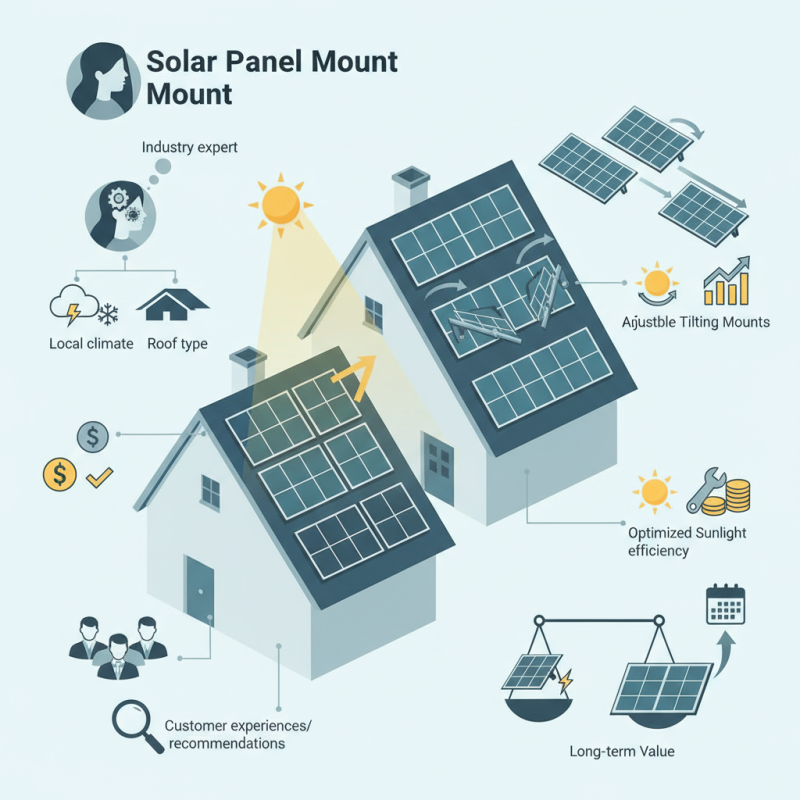
Choosing the right solar panel roof mount can be a daunting task. With so many options available, it is essential to understand the specific needs of your home. Industry expert, Dr. Emily Green, states, "A good solar panel roof mount can make or break your system's efficiency." This highlights the importance of selecting the proper mount for optimal energy capture.
Solar panel roof mounts come in various styles. Each has its advantages and downsides. For example, a fixed mount is simple and cost-effective, but it doesn't allow for seasonal adjustments. On the other hand, adjustable mounts can optimize sunlight exposure, but they often come with higher installation costs. It's crucial to factor in the local climate and roof type when choosing a mount.
Incorporating expert advice and customer experiences can guide your decision. Researching different mounts and seeking recommendations can help uncover the best solutions. Be mindful of installation requirements and potential long-term value. A poorly chosen solar panel roof mount might lead to inefficiencies and increased costs over time. Keep these factors in mind as you explore options for your home.
Understanding Different Types of Solar Panel Roof Mounts
When choosing a solar panel roof mount, understanding the types available is crucial. There are three main categories: fixed mounts, adjustable mounts, and tracking mounts. Fixed mounts are the simplest and most economical. They hold panels at a predetermined angle, maximizing solar exposure. However, they lack flexibility and may not optimize energy capture year-round.
Adjustable mounts can tilt panels according to seasonal changes. This allows for better performance during winter when the sun is lower in the sky. According to the National Renewable Energy Laboratory, adjustable mounts can increase energy efficiency by up to 15%. Yet, this added efficiency comes at a higher cost and may require more maintenance.
Tracking mounts track the sun’s position throughout the day. They can boost energy production significantly. Some studies indicate that these systems can increase output by over 30%. However, they are complex and may face mechanical issues. Choosing the right mount requires balancing cost, efficiency, and potential maintenance challenges. Each type serves different needs, and it’s essential to reflect on your specific situation.
Comparison of Different Types of Solar Panel Roof Mounts
This chart illustrates the estimated installation costs of different types of solar panel roof mounts. Fixed mounts are the most economical option, while tracking mounts tend to be more expensive due to their advanced features.
Assessing Roof Structure and Material Compatibility
When considering solar panel roof mounts, the compatibility of your roof's structure and material is crucial. Analyzing your roof type is essential. Roofs made of asphalt shingles, metal, or tile each have specific installation requirements. For instance, tile roofs often need special brackets for secure mounting. Metal roofs may offer a simpler installation but can be more challenging in terms of water sealing. Understanding these differences can impact your installation process.
Next, take a moment to assess the structural integrity of your roof. Age and condition matter. A roof in need of repair can compromise the mounting of solar panels. Inspect for cracks, leaks, or warping. If your roof is older than twenty years, consider a thorough evaluation. It might be time for repairs or even a replacement. Remember, the strength of your roof will determine the longevity of your solar array.
Compatibility goes beyond the material. Consider the angle and orientation of your roof as well. A flat roof requires different mounting systems compared to a sloped roof. Locations with heavy snowfall or wind need additional support. Failing to assess these factors could lead to costly errors later. Reviewing your roof's characteristics is key to a successful solar panel installation.
Evaluating Solar Panel Size and Weight Requirements
When evaluating solar panel size and weight requirements, it is crucial to consider your roof's structural capacity. Most solar panels weigh between 40 to 50 pounds each, which can add significant weight to a roof. According to the National Renewable Energy Laboratory, roofs must typically support an additional 2 to 3 pounds per square foot for solar installations. This is vital for ensuring long-term durability and safety.
Consider the dimensions of the solar panels. Standard panels measure approximately 65 inches by 39 inches. Depending on your roof size and orientation, it's essential to calculate how many panels can fit without compromising structural integrity. A report by the Solar Energy Industries Association indicates that properly sized panels can enhance energy efficiency while minimizing potential damage to the roof.
Additionally, factors like wind load and snow accumulation must be considered. High winds can lift panels if not securely mounted, while accumulated snow can add extra weight. Industry data suggests that installations in areas with heavy snowfall need a more robust mounting system. Evaluating these details ensures optimal performance and longevity of your solar energy system. Proper planning can mitigate these challenges, helping homeowners make informed decisions.
Considering Local Climate and Weather Conditions
When choosing a solar panel roof mount, local climate plays a crucial role. Different regions experience varying weather patterns, which can impact the performance and longevity of solar panels. For instance, areas with heavy snowfall require mounts that can support the added weight. Conversely, places with high winds need sturdy mounts to prevent damage during storms.
Temperature is another critical factor. In hotter climates, solar panels can overheat, leading to decreased efficiency. Proper ventilation in the mounting system can help alleviate this issue. In colder environments, frost can hinder energy production. Homeowners should consider mounts that can allow for easy snow shedding.
Rain and humidity also affect the choice of mount. Locations with frequent rain need corrosion-resistant materials to ensure durability. Homes in areas prone to hurricanes might require specialized mounts for additional security. Researching local weather patterns can help homeowners make informed decisions. It's essential to align your mount choice with the specific needs of your environment, ensuring reliability and efficiency for years to come.
How to Choose the Best Solar Panel Roof Mount for Your Home?
| Mount Type | Ideal Climate | Wind Resistance | Tilt Angle | Material |
| Fixed Mount | Mild Climates | Up to 120 mph | 30-45 degrees | Aluminum |
| Adjustable Mount | Variable Climates | Up to 140 mph | 15-60 degrees | Stainless Steel |
| Ground Mount | All Climates | Up to 150 mph | 20-50 degrees | Galvanized Steel |
| Ballasted Mount | Windy Areas | Up to 130 mph | 15-30 degrees | Concrete |
Researching Installation and Maintenance Options for Roof Mounts
When considering roof mounts for solar panels, it's essential to research installation options. Proper installation affects the efficiency and longevity of solar systems. According to a 2022 report by the Solar Energyscape, incorrect installation can reduce energy production by up to 30%. Therefore, choosing a qualified installer is crucial.
Maintenance also plays a significant role in solar panel performance. Regular cleaning and inspections can prevent issues. The National Renewable Energy Laboratory (NREL) indicates that neglecting upkeep can decrease system efficiency. Ideally, homeowners should plan for annual maintenance checks.
Understanding local weather conditions is vital. Extreme temperatures and heavy snowfall impact mount durability. A study by the International Renewable Energy Agency (IRENA) outlines that roofs in harsh climates may require reinforced mounts. This reflection emphasizes the importance of researching location-specific solutions before installation.