How to Choose the Right Polypropylene Pipe?
Choosing the right Polypropylene Pipe requires more than comparing prices or wall thicknesses. The correct choice depends on fluid type, operating temperature, pressure, flow rate, and installation conditions. A pipe carrying chilled water may perform differently from one handling aggressive chemicals. Small details matter, including sunlight exposure, thermal expansion, and available connection methods.
Reliable selection begins with verified technical data. Check the manufacturer’s pressure ratings, temperature limits, dimensional standards, and chemical-resistance charts. Confirm that the product suits the intended service, rather than trusting a general “universal” claim. For hot-water systems, temperature cycling can create expansion stress and movement at supports. For industrial systems, an apparently compatible fluid may still affect seals, fittings, or welded joints. Qualified engineers and experienced installers should review these risks before purchase.
Field installers often emphasize joint preparation because poor connections can undermine excellent pipe material. Clean, aligned surfaces and correct fusion temperatures help create dependable joints. Storage also matters. Pipes should remain protected from sharp impacts, contamination, and prolonged ultraviolet exposure. No selection guide is perfect. Actual site conditions may challenge laboratory data, especially in crowded plant rooms or uneven trenches. That uncertainty deserves attention, not assumptions. A practical decision should balance performance, compliance, maintenance access, supplier documentation, and long-term cost. The cheapest Polypropylene Pipe may become expensive after repeated leaks, difficult repairs, or premature replacement. Careful comparison creates a safer and more dependable system.
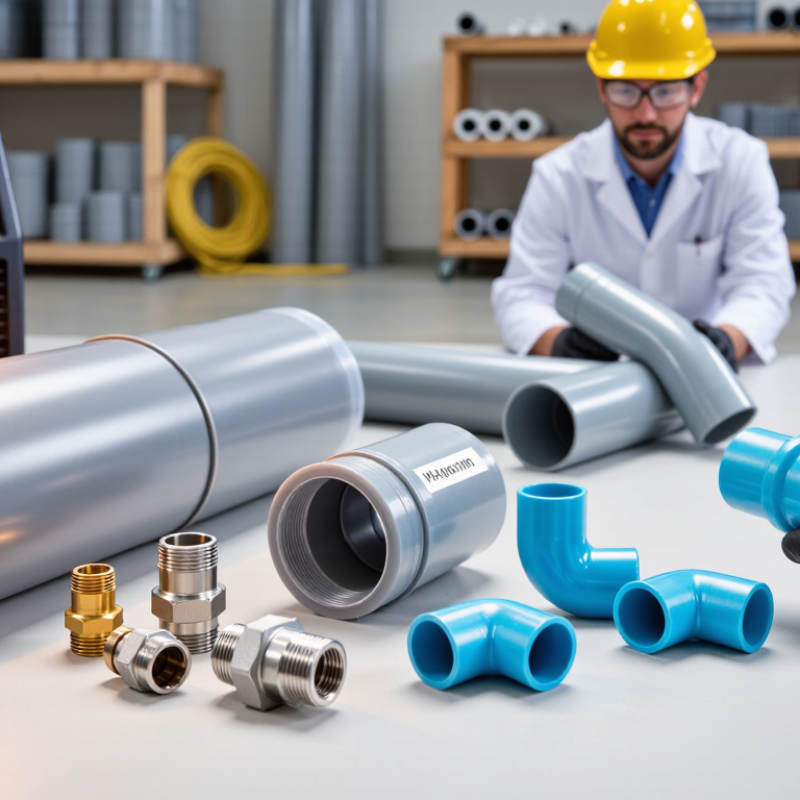
Understanding Polypropylene Pipe Types and Their Applications
How to Choose the Right Polypropylene Pipe?
Polypropylene pipes are not one uniform product. Their type affects strength, flexibility, temperature resistance, and joining methods.
PP-R is widely used for hot and cold water systems. It handles heat well when correctly designed. PP-H offers strong chemical resistance and suits industrial drainage or process lines. PP-B has greater flexibility and impact resistance. It can perform well in low-temperature applications. PP-RCT may support higher pressure at elevated temperatures, but design calculations remain necessary.
Application conditions should guide the selection. A household water line may need smooth internal walls and approved potable-water certification.
A chemical transfer line requires compatibility checks against concentration, temperature, and exposure time. Underfloor heating needs controlled expansion and reliable fusion joints.
Outdoor installations require protection from ultraviolet exposure. A pipe left in direct sunlight can weaken earlier than expected.
Wall thickness and pressure class also matter. Do not select by diameter alone. Measure flow demand, operating temperature, pressure, and thermal expansion.
Fusion tools must be clean and correctly heated. A poor joint can look acceptable while hiding a weak connection.
I have seen installation plans fail because supports were spaced too far apart. Allowance for movement is often overlooked.
Local codes, manufacturer data, and project testing should be checked before installation. There is no universal “best” polypropylene pipe.
Choosing the Correct Pipe Size, Rating, and Connection Method
Choosing the right polypropylene pipe starts with sizing, not appearance. Measure the required flow, available pressure, fluid temperature, and route length. A 10% reduction in internal diameter reduces flow area by about 19%, increasing velocity and friction losses. On site, a pipe can look generous but perform poorly after fittings and bends are added. I recheck the actual internal diameter, because nominal size can mislead.
Pressure rating must match the operating temperature and service life. ISO 15874 classifies polypropylene piping systems by application, temperature, and pressure conditions. The Plastics Pipe Institute’s Technical Report TR-4 also shows that allowable pressure depends on material designation and temperature, rather than one universal rating. For hot-water systems, use the design pressure at the actual operating temperature. Shortcuts here are expensive. A safety margin still needs engineering justification.
Connection method affects reliability and installation time. Socket fusion suits many smaller lines, while butt fusion is practical for larger diameters and long, straight runs. Electrofusion can help in restricted spaces, but it demands clean surfaces, correct alignment, and controlled heating. Mechanical connections are useful near valves or dissimilar materials, yet seals require inspection. A slightly oversized pipe may reduce friction, but it can raise cost and slow heating. My own design reviews sometimes change after checking fitting losses—an imperfect step, but a necessary one. Always verify the selected dimensions, pressure class, and joint procedure against the current standard and project specification.
How to Choose the Right Polypropylene Pipe? - Choosing the Correct Pipe Size, Rating, and Connection Method
Select a polypropylene pipe by evaluating the required flow, outside diameter, wall thickness, pressure-temperature conditions, fluid compatibility, and joining method. The values below are practical reference data for common PP-R pressure-pipe systems and should be confirmed against the applicable product standard and project specification.
1. Common PP-R Pipe Size and Pressure-Series Reference | Nominal Outside Diameter | SDR 11
Wall Thickness | SDR 7.4
Wall Thickness | SDR 6
Wall Thickness | Approximate Internal Diameter
SDR 11 | Typical Application |
| 20 mm | 1.9 mm | 2.8 mm | 3.4 mm | 16.2 mm | Small branch lines, washbasins, and individual fixtures |
| 25 mm | 2.3 mm | 3.5 mm | 4.2 mm | 20.4 mm | Short branches and low-flow distribution lines |
| 32 mm | 3.0 mm | 4.4 mm | 5.4 mm | 26.0 mm | Longer branches, small apartment distribution, and equipment connections |
| 40 mm | 3.7 mm | 5.5 mm | 6.7 mm | 32.6 mm | Multi-fixture branches and small circulation lines |
| 50 mm | 4.6 mm | 6.9 mm | 8.3 mm | 40.8 mm | Floor distribution lines and medium-flow services |
| 63 mm | 5.8 mm | 8.6 mm | 10.5 mm | 51.4 mm | Main building branches and moderate-flow pipework |
| 75 mm | 6.8 mm | 10.3 mm | 12.5 mm | 61.4 mm | Risers, plant-room distribution, and larger branches |
| 90 mm | 8.2 mm | 12.3 mm | 15.0 mm | 73.6 mm | Large risers and low-loss distribution mains |
| 110 mm | 10.0 mm | 15.1 mm | 18.3 mm | 90.0 mm | Building mains and high-flow distribution systems |
Important: Wall thicknesses are rounded reference values based on common metric PP-R dimensions. Actual available sizes may vary by standard and manufacturer. Internal diameter is calculated as outside diameter minus twice the wall thickness.
2. Pressure Rating and Temperature Selection | Pipe Series | Relative Wall Thickness | Common Nominal Pressure Class at 20°C | Best-Suited Service | Selection Consideration |
| SDR 11 | Lower wall thickness | Approximately PN 10 | Cold-water distribution and moderate-pressure services | Provides a larger internal diameter and lower material use, but has less pressure capacity than thicker series |
| SDR 7.4 | Medium wall thickness | Approximately PN 16 | General hot- and cold-water distribution | A practical compromise between flow area, pressure resistance, and temperature capability |
| SDR 6 | Higher wall thickness | Approximately PN 20 | Hot-water systems, risers, and higher-pressure applications | Offers increased pressure resistance, but reduces internal diameter and increases weight |
Pressure-temperature rule: Nominal pressure classes are generally referenced at 20°C. Allowable pressure decreases as operating temperature rises, so hot-water systems must be checked using the pipe manufacturer's temperature derating tables and the relevant standard.
3. Pipe Size Selection by Flow Requirement | Approximate Flow Range | Typical Recommended PP-R Outside Diameter | Typical Water Velocity Target | Suitable Use | Design Notes |
| Up to 0.10 L/s | 20 mm | Approximately 0.5–1.0 m/s | Single fixture branch | Check the minimum flow required by the fixture and the available pressure |
| 0.10–0.20 L/s | 25 mm | Approximately 0.6–1.2 m/s | Small branch serving several fixtures | Use a larger size if the run is long or pressure loss must be minimized |
| 0.20–0.40 L/s | 32–40 mm | Approximately 0.6–1.5 m/s | Multiple fixtures or short distribution mains | Calculate friction loss, fitting loss, and simultaneous demand |
| 0.40–0.80 L/s | 50–63 mm | Approximately 0.7–1.5 m/s | Floor mains and medium-flow services | Consider future expansion and pressure loss through valves and fittings |
| 0.80–1.50 L/s | 75–90 mm | Approximately 0.7–1.5 m/s | Risers and larger building distribution lines | Confirm structural support, thermal movement, and hydraulic balance |
| Above 1.50 L/s | 90–110 mm or larger | Normally kept within the project design limit | Large mains and high-demand services | Complete a hydraulic calculation rather than selecting by diameter alone |
Flow guidance: The flow ranges are preliminary sizing references, not a substitute for hydraulic design. Final sizing should account for pipe length, elevation, available pressure, simultaneous demand, fittings, valves, water temperature, and permissible noise.
4. Choosing the Correct Connection Method | Connection Method | How It Works | Recommended Applications | Main Advantages | Limitations and Quality Checks |
| Socket Heat Fusion | The pipe outside surface and fitting socket are heated, then pressed together to form a homogeneous joint. | Small and medium PP-R plumbing lines, typically up to the sizes permitted by the applicable installation standard | Reliable leak-resistant joint, no solvent, and no separate sealing material at the fused interface | Requires clean, square pipe ends, correct heating temperature and time, proper insertion depth, and adequate cooling |
| Butt Fusion | Matching pipe ends are heated and pressed together under controlled pressure. | Larger-diameter pipework and prefabricated or engineered systems | Creates a continuous joint with no fitting required at a straight connection | Needs specialized equipment, alignment, controlled bead formation, and trained operators |
| Electrofusion | An electrically heated fitting melts and fuses the pipe surface inside the fitting. | Repairs, confined spaces, difficult alignment, and selected large-diameter systems | Useful where conventional fusion equipment cannot be positioned easily | Requires a compatible electrofusion fitting, stable power supply, surface preparation, and strict cooling time |
| Mechanical Threaded or Flanged Transition | A metal or reinforced transition fitting provides a connection to valves, pumps, tanks, or other threaded/flanged components. | Removable equipment connections and transitions to other piping materials | Allows disassembly and simplifies maintenance | Do not cut threads directly into standard plastic pipe; support the joint and avoid excessive tightening or torsion |
| Compression or Mechanical Coupling | A mechanical seal and grip ring hold the pipe without heat fusion. | Selected repair, temporary, or transition applications where approved by the system specification | Can be installed without fusion equipment and may support easier maintenance | Must be specifically rated for polypropylene, pressure, temperature, fluid, and pipe dimensions |
5. Practical Selection Checklist | Check Item | What to Confirm | Why It Matters |
| Fluid and application | Potable water, heating water, compressed air, industrial fluid, or another service | Material compatibility, hygienic approval, and pressure-temperature requirements differ by service |
| Operating temperature | Normal, maximum, and occasional peak temperature | Allowable pressure and expected service life are reduced at elevated temperature |
| Working and surge pressure | Steady pressure, pump pressure, water hammer, and safety margin | The pipe must withstand both normal and transient loads |
| Required flow | Design flow, simultaneous demand, and acceptable velocity | Controls pressure loss, noise, and the selected outside diameter |
| Pipe series | SDR or wall-thickness series and nominal pressure class | Two pipes with the same outside diameter can have different internal diameters and pressure capabilities |
| Joining system | Socket fusion, butt fusion, electrofusion, or mechanical transition | Connection method affects installation tools, labor, access, testing, and maintenance |
| Installation environment | Indoor or outdoor location, ultraviolet exposure, supports, insulation, and thermal expansion | Polypropylene systems require suitable protection, anchoring, guiding, and movement allowance |
| Compliance documentation | Applicable pipe standard, pressure-temperature table, dimensional tolerances, and local approvals | Ensures the selected pipe is legally and technically suitable for the project |
Reference basis: common metric PP-R dimensional practice and pressure-series terminology used in international thermoplastic piping systems. Always use the current applicable standard, project hydraulic calculations, and the selected pipe system's technical data before installation.
Balancing Material Quality, Cost, and Maintenance Requirements
Choosing polypropylene pipe is a lifecycle decision, not a purchase-price contest. Material quality affects pressure stability, joint reliability, and replacement frequency. The Plastics Pipe Institute’s Polypropylene Pressure Pipe Handbook describes service lives exceeding 50 years under suitable pressure and temperature conditions. That figure is useful, but it is not automatic. Poor installation, excessive heat, or unsuitable fittings can shorten the real service life.
Cost also includes labor, inspection, water loss, and access to repairs. A cheaper pipe may require more frequent shutdowns or replacement work. The U.S. Environmental Protection Agency reports that household leaks can waste nearly 10,000 gallons of water annually. In larger systems, small leaks become expensive quickly. A practical estimate should include pipe, fittings, welding equipment, testing, insulation, and future access. Material savings alone can mislead.
Maintenance requirements deserve equal attention. Smooth internal surfaces usually reduce sediment buildup, but they do not eliminate inspection needs. Review pressure ratings, operating temperatures, chemical compatibility, and ultraviolet exposure before ordering. The ISO 15874 series establishes performance requirements for polypropylene piping systems, supporting a more consistent quality check. Still, standards cannot correct careless workmanship. I would also request batch records and installation training, even when the project seems simple. That extra step costs little. It may prevent an expensive mistake.