The Duravant family of operating companies serve the food processing, packaging and material handling segments.

Choosing a Pvc Profile Mixer in China requires more than comparing motor power, vessel size, or catalogue prices. A reliable machine must disperse calcium carbonate, stabilizers, pigments, and PVC resin evenly. It should also protect the blend from overheating during repeated cycles. In a working factory, operators watch the temperature display closely. They check whether powder clings to the vessel wall. They listen for unusual vibration. These small details often reveal more than a polished brochure.
Dr. Michael Thielen, a plastics-processing specialist, offers a useful principle: “A mixer must deliver repeatable dispersion, not merely impressive speed.” This idea guides the China Top 10 PVC Profile Mixer Manufacturers review. The selection considers mixing uniformity, blade design, cooling performance, discharge structure, control systems, spare-parts support, and documented production experience. It also examines whether manufacturers can adapt machines for different profile formulations and batch sizes. A strong supplier should explain its testing method clearly. That matters.
No ranking is perfect. Buyer priorities differ. Some plants need compact equipment for flexible production. Others require high-volume systems with automated feeding and temperature control. Price can attract attention, but weak after-sales support may create longer costs later. We therefore compare practical evidence, including factory applications, technical documentation, customization ability, and service response. A few manufacturers may provide limited public data, which deserves caution rather than automatic rejection. This introduction is not a final verdict. It is a careful starting point for engineers, purchasing teams, and plant owners seeking a dependable Pvc Profile Mixer.
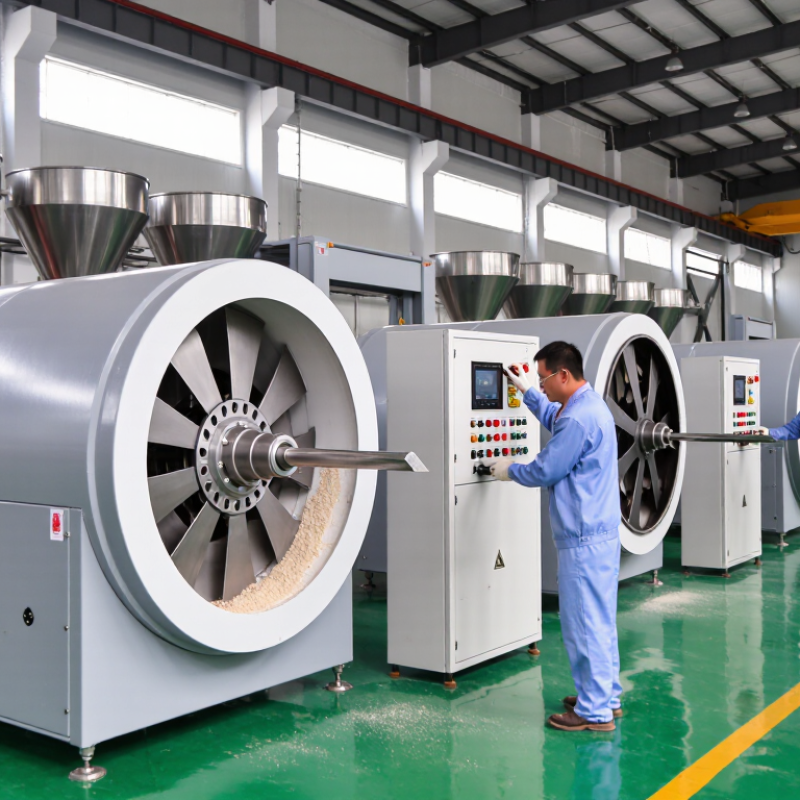
A PVC profile mixer is an industrial machine that prepares a uniform compound before extrusion. It blends PVC resin with stabilizers, pigments, lubricants, fillers, and impact modifiers. The mixer does not simply stir materials. It controls heat, dispersion, moisture, and powder flow. These factors directly influence profile strength, surface quality, and dimensional stability.
In plastic manufacturing, the mixer usually combines high-speed heating with controlled cooling. During heating, friction helps distribute additives throughout the resin. A cooling stage then reduces material temperature before extrusion. This prevents premature fusion and reduces feeding problems. In production practice, operators monitor mixing time, blade speed, temperature, and batch weight. Small changes can create visible streaks or brittle edges. Clean equipment matters too. Residue from an earlier color can affect the next batch.
When assessing China’s top 10 PVC profile mixer manufacturers, buyers should examine process data rather than appearance alone. Useful evidence includes test reports, temperature records, spare-part support, and trial-batch results. A reliable supplier should explain how the mixer handles different formulations and output levels. Some specifications look impressive on paper. They may still fail under continuous operation. That is where careful testing is necessary. Operators should also review noise, dust control, energy use, and cleaning time. The best choice depends on the recipe, profile design, factory space, and production rhythm, not only the machine’s rated capacity.
When comparing China’s top 10 PVC profile mixer manufacturers, evaluate the equipment before the sales presentation. A reliable supplier should explain mixing volume, heating method, cooling time, and motor load clearly. Numbers can mislead. Ask for production records from profiles similar to yours.
Inspect the factory’s quality process closely. Check welding accuracy, shaft alignment, blade material, electrical components, and insulation thickness. A short trial run can reveal unstable temperature control or uneven powder movement. Request test data for torque, batch consistency, energy use, and discharge time. Look inside. Poor finishing around the vessel may suggest weak process control.
Technical support also separates capable manufacturers from ordinary suppliers. Confirm whether engineers can guide installation, operator training, spare-part selection, and troubleshooting remotely. Review warranty terms in writing, including response time and excluded conditions. Certifications matter, but they should match the actual machine configuration. Ask for customer references and recent factory inspection records. Cost deserves attention, yet the lowest quotation may hide thinner steel, limited automation, or expensive replacement parts. I would also compare maintenance access, because a mixer that is difficult to clean can slow every shift. No evaluation is perfect. Even experienced buyers may overvalue polished demonstrations and overlook daily service details. Ask why.
| No. | Evaluation Dimension | Recommended Benchmark | Why It Matters for PVC Profiles | Verification Method |
|---|---|---|---|---|
| 1 | Mixer Configuration | High-speed hot mixer combined with a separate cooling mixer; commonly available working volumes range from approximately 50 to 1,000 L. | PVC dry blends require rapid heating, homogeneous dispersion, and controlled cooling before extrusion. | Request the equipment layout, effective working volume, batch diagram, and a witnessed trial using the intended formulation. |
| 2 | Batch Capacity and Throughput | A practical batch size is often about 50–70% of the nominal vessel volume, depending on bulk density and formulation. Confirm output in kg/h rather than relying only on vessel size. | Overfilling can reduce mixing quality, while underfilling lowers productivity and increases energy consumption per kilogram. | Compare tested batch records, cycle time, discharge time, and actual kilograms per hour with PVC stabilizer and filler included. |
| 3 | Temperature Control | Independent temperature measurement and PLC-based control, with a typical hot-mixing discharge range of approximately 110–130°C and cooling discharge commonly below 45–50°C. | Stable temperature control helps prevent premature fusion, thermal degradation, uneven lubrication, and inconsistent extrusion behavior. | Check sensor locations, calibration records, alarm limits, temperature uniformity, and repeatability across at least three test batches. |
| 4 | Rotor and Paddle Design | Rotor geometry should provide axial and radial circulation, with variable-speed operation typically available within a manufacturer-defined range suited to the formulation. | Efficient circulation improves dispersion of calcium carbonate, titanium dioxide, pigments, stabilizers, and lubricants. | Review rotor drawings, mixing dead-zone analysis, speed control range, wear-clearance data, and sample blend uniformity. |
| 5 | Drive System and Energy Efficiency | The drive should provide adequate torque during loading and stable speed under changing material resistance; inverter control and overload protection are preferred. | PVC formulations can produce significant torque fluctuations, especially when fillers and dry additives are introduced. | Compare motor rating, starting method, peak current, energy consumption per batch, overload settings, and service access to the drive system. |
| 6 | Contact Materials and Wear Resistance | Product-contact surfaces should use suitable stainless steel or wear-resistant alloy components; high-filler applications require replaceable wear parts. | Abrasive mineral fillers can accelerate paddle, liner, discharge-gate, and vessel wear, affecting clearance and blend consistency. | Ask for material certificates, hardness or treatment specifications, expected wear life, spare-part pricing, and replacement procedures. |
| 7 | Automation and Process Traceability | PLC and HMI control should record recipe, speed, temperature, mixing time, alarms, and batch results; remote diagnostics are an additional advantage. | Recorded process data supports repeatable color, density, fusion behavior, and extrusion stability. | Inspect the control screens, recipe permissions, data-export functions, backup method, language options, and fault-history records. |
| 8 | Safety and Compliance | The machine should include guarded moving parts, emergency stops, lid interlocks, overload protection, grounding, pressure or discharge safeguards, and electrical documentation appropriate to the destination market. | Hot surfaces, rotating equipment, stored energy, and automatic discharge operations create significant operator risks. | Review risk assessment, wiring diagrams, factory acceptance test records, safety-device testing, and applicable conformity documentation. |
| 9 | Quality Assurance and Testing | A reliable manufacturer should maintain documented inspections for fabrication, welding, machining, assembly, electrical testing, empty-load operation, and full-load trials. | Documented quality checks reduce the risk of vibration, leakage, temperature deviation, premature wear, and commissioning delays. | Request inspection plans, dimensional reports, motor and electrical test records, factory acceptance criteria, and corrective-action procedures. |
| 10 | After-Sales Support and Total Cost | Evaluate installation guidance, operator training, spare-parts availability, response time, warranty terms, maintenance requirements, shipping cost, and lifecycle energy use. | The lowest purchase price may lead to higher downtime, difficult maintenance, and greater long-term operating costs. | Use a five-year total-cost comparison covering purchase, installation, consumables, planned maintenance, critical spares, energy, and downtime risk. |
Note: The benchmark values are general PVC dry-blend mixing guidelines. Final requirements should be confirmed through formulation-specific trials, equipment drawings, and documented factory acceptance testing.
China’s PVC profile industry is expanding with construction, renovation, and infrastructure demand. Grand View Research valued the global PVC market at approximately USD 45 billion in 2023. It also projects steady growth through 2030. This creates practical demand for reliable high-speed mixers, cooling units, and automated feeding systems.
A credible review of China’s top 10 PVC profile mixer manufacturers should examine more than factory size. Production consistency matters. Key checks include stainless-steel contact surfaces, temperature control accuracy, mixing-cycle stability, and after-sales response. Energy consumption is also important, especially for processors running several batches daily. Manufacturers with documented testing procedures usually offer stronger operational confidence. However, catalog claims can be optimistic.
Real factory experience reveals small details. A stable discharge door prevents material loss. A clear control panel reduces operator mistakes. Easy access to bearings and blades shortens maintenance time. Industry reports from MarketsandMarkets identify automation and process efficiency as major themes in plastics machinery development. Chinese suppliers increasingly provide PLC controls, recipe storage, and customized vessel capacities. These features are useful, but not automatically better. Buyers should request trial samples, noise readings, batch records, and spare-parts lead times before selecting among the top 10. Price alone remains a weak measure of value.
Technology, Product Range, and Industry Applications
China’s top ten PVC profile mixer manufacturers reflect a broad range of processing technologies. Their equipment commonly combines hot and cold mixing units, stainless-steel vessels, high-speed blades, and programmable temperature controls. Some systems use vacuum feeding to reduce dust and improve material handling. Others add automatic weighing, discharge valves, and real-time monitoring for steadier production.
Product ranges often cover laboratory mixers, small-batch machines, and high-capacity production systems. A compact mixer may handle formulation trials with limited material waste. Larger models support continuous manufacturing of window profiles, door frames, wall panels, decorative trim, and technical sections. Many suppliers also offer customized blade designs, cooling systems, dust collectors, and conveyor connections. These details matter when factory space is restricted.
Practical evaluation should include mixing uniformity, heating speed, cooling efficiency, energy use, and cleaning time. Operators should inspect the welds, bearing protection, control-panel layout, and emergency shutoff response. Real production trials are more convincing than polished catalogs. Not every claimed output rate survives difficult formulations. PVC compounds with stabilizers, fillers, pigments, or recycled content can behave differently. A reliable supplier should provide test records, operating guidance, spare-parts support, and clear maintenance instructions. Even then, buyers should verify results using their own resin grades and production targets. Small oversights can create large batches of inconsistent profiles.
Selecting a suitable Chinese PVC profile mixer manufacturer requires more than comparing quotations. PlasticsEurope’s Plastics—the Facts 2023 reported global plastics production of 400.3 million tonnes in 2022. PVC represented roughly 17% of that volume, keeping stable mixing equipment commercially important. Start by checking the manufacturer’s experience with rigid PVC profiles, calcium carbonate, stabilizers, and impact modifiers. Ask for batch records, torque curves, heating data, and finished-profile samples. A polished brochure is not enough.
Technical verification should focus on mixing consistency and production control. Request the working volume, rotor speed, motor power, temperature-control method, discharge time, and recommended batch size. Compare these figures under identical formulas. Independent laboratory reports can verify dispersion, density, moisture, and thermal stability. ISO 9001 certification may support process discipline, but it does not prove machine performance. Witness a factory acceptance test when possible. Watch the powder flow, noise, dust leakage, and discharge behavior.
Supplier reliability also needs practical evidence. Review spare-parts availability, electrical documentation, installation support, and response times. Check whether the mixer can be adjusted for your actual formula, not only a catalog recipe. A small production trial often reveals more than a long meeting. My own checklist would include stronger scoring for after-sales service; buyers sometimes overvalue motor power. That is an avoidable mistake. Consider total cost over five years, including energy, maintenance, downtime, and operator training. The right Chinese manufacturer should provide measurable test results, clear limitations, and a realistic delivery schedule.