Top Cardboard Box Machine Manufacturers Worldwide?

Choosing among the top cardboard box machine manufacturers worldwide requires more than comparing machine speed. Buyers must examine forming accuracy, flute compatibility, energy use, software integration, maintenance support, and total ownership cost. A fast machine can still create waste when feeding is unstable or calibration is neglected. That detail matters on a busy factory floor, where misaligned blanks may pile beside the conveyor.

Packaging engineer and industry consultant David Harrison explains, “The right machine is a production system, not a standalone purchase.” His observation captures the central issue behind this comparison. Leading manufacturers usually combine converting equipment, automation, remote diagnostics, and operator training. However, their strengths differ. One supplier may excel in high-volume flexo folder-gluers, while another offers better flexibility for short runs and customized cartons. Some manufacturers also provide stronger regional service networks, which can reduce costly downtime.

This article reviews major cardboard box machine manufacturers across key production markets. It considers machine capability, engineering reliability, innovation, after-sales service, and practical factory experience. Certifications and published specifications matter, but they do not tell the whole story. A machine may perform impressively in a demonstration and behave differently under continuous dust, humidity, and changing board quality. That is where careful evaluation becomes necessary. No ranking is perfect. Buyers should verify local references, test their own materials, and question impressive claims before investing.
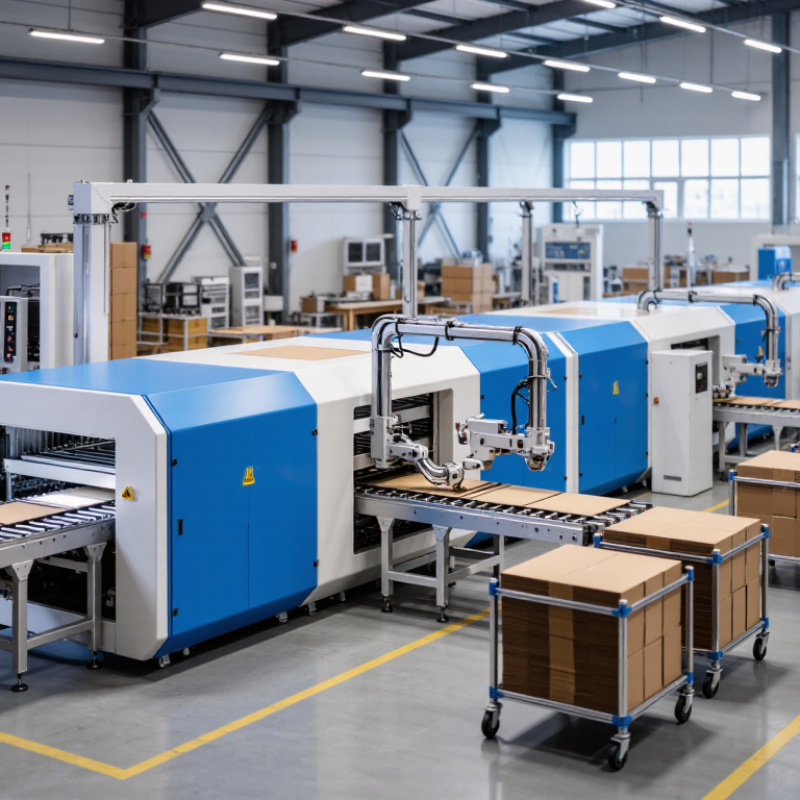
Top Cardboard Box Machine Manufacturers Worldwide?

What Are Cardboard Box Machines and How Do They Work?

Cardboard box machines turn flat sheets or corrugated board into usable packaging. They perform scoring, printing, slotting, cutting, folding, and gluing in a controlled sequence. A feeder draws sheets from a stack and maintains steady spacing. Rollers guide each blank through the machine. Creasing creates accurate fold lines without crushing the flutes. Cutting tools shape panels, handles, or locking tabs. Some lines process hundreds of boxes per hour. However, speed depends on board grade, design, and machine settings. Thick double-wall board needs different pressure than lightweight single-wall stock.

In a typical workflow, an operator enters dimensions and checks the tooling setup. Sensors monitor alignment, sheet movement, and adhesive application. The folded blank exits as a flat carton, ready for transport or final forming. Rotary systems suit continuous production, while folder-gluers handle complex formats. Machines reduce labor, but they do not remove every production risk. Dust, worn belts, moisture, and incorrect settings can cause skewed cuts or weak seams. Practical inspection still matters. A perfect setup is not always realistic. Small errors can reveal larger process problems.

Tips: Keep board moisture stable and clean dust from feed rollers. Check crease depth with a small trial batch. Record speed, pressure, and glue settings for repeat jobs. Operators should wear protective equipment and follow the machine manual. A rushed setup often costs more than a careful adjustment.

Top Cardboard Box Machine Manufacturers Worldwide? What Are Cardboard Box Machines and How Do They Work?

Typical corrugated flute heights formed during cardboard box production

Cardboard box machines convert paper rolls or corrugated sheets into finished packaging through processes such as fluting, laminating, printing, slotting, folding, gluing, and die-cutting. The flute profile affects cushioning, stacking strength, board thickness, and the machine settings required. The values shown are typical nominal industry ranges; actual flute heights vary by paper grade, production standard, and manufacturer specification.

How to Evaluate Cardboard Box Machine Manufacturers Worldwide

Choosing a cardboard box machine manufacturer requires more than comparing catalog prices. In practical factory evaluations, I examine machine output, operator safety, and maintenance access. Ask for production records from facilities with similar box sizes and materials. A credible supplier explains tolerances, energy use, and expected waste clearly. Vague answers are warning signs. Request sample cartons before signing any agreement.

Technical expertise appears in machine details. Check feeder stability, scoring accuracy, printing alignment, and changeover time. Ask whether the equipment handles recycled board without frequent jams. Inspect welds, electrical cabinets, sensors, and emergency controls during a factory visit. If travel is impossible, request detailed videos and live production tests. Small defects matter.

Reliability also depends on service after installation. Confirm spare-part availability, technician response times, training methods, and remote troubleshooting. Ask for manuals written in clear technical language. Review warranty conditions carefully, including exclusions and installation responsibilities. Independent audits and relevant test reports can strengthen confidence, but documents should match the actual machine. I once favored a low-cost quotation with impressive speed claims. That judgment was incomplete. The machine needed more adjustment than expected, causing avoidable downtime. A careful evaluation compares total operating cost, not only purchase price. Keep questions specific.

Leading Cardboard Box Machine Manufacturers by Global Region

Top Cardboard Box Machine Manufacturers Worldwide?

Leading Cardboard Box Machine Manufacturers by Global Region

The global cardboard box machinery market reflects regional packaging demand. Smithers’ 2024 analysis places the worldwide corrugated packaging market above USD 200 billion, with continued growth expected through 2029. Asia-Pacific leads production, supported by expanding e-commerce and food delivery networks. Its manufacturers commonly offer high-speed flexographic printers, folder-gluers, and integrated die-cutting lines.

Europe remains strong in precision engineering and energy efficiency. Many regional manufacturers focus on servo-controlled systems, quick changeovers, and reduced material waste. Mordor Intelligence reports that automation and sustainable packaging are major forces shaping corrugated equipment investment. Small gains matter. A two-minute setup reduction can improve daily output noticeably.

North American manufacturers often emphasize complete production lines, digital monitoring, and after-sales service. Their equipment suits large plants requiring stable throughput and remote diagnostics. Latin America shows growing demand for flexible machinery, especially where packaging suppliers serve agricultural exports and retail markets. The Middle East and Africa are developing more localized converting capacity, although skilled maintenance staff can be limited.

Regional rankings can mislead. A fast machine is not always the best machine. Buyers should compare board grades, energy use, service response, operator training, and spare-parts access. Reports provide useful market direction, but factory conditions decide real performance. Some published projections also vary widely, so independent testing remains necessary before investment.

Top Cardboard Box Machine Manufacturers Worldwide? - Leading Cardboard Box Machine Manufacturers by Global Region

Global Region Primary Manufacturing Strength Common Machine Categories Typical Automation Profile Frequently Supported Box Formats Key Compliance Considerations Regional Market Position
East Asia Large-scale production of converting equipment and integrated packaging lines Flexo folder-gluers, rotary die-cutters, corrugators, folder-gluer lines, case makers From semi-automatic systems to high-speed servo-controlled lines with vision inspection Regular slotted cartons, die-cut cartons, retail-ready packaging, printed shipping boxes Electrical safety, machine guarding, export-market documentation, local and international quality systems Major global supply base
South Asia Cost-effective machinery for expanding domestic and export-oriented packaging sectors Sheet plants, flexographic printers, slotters, folder-gluers, stitching machines Strong demand for modular, operator-friendly and semi-automatic equipment Standard shipping cartons, agricultural boxes, e-commerce cartons, stitched cases Local electrical standards, occupational safety requirements and export certifications where applicable Fast-growing production base
Europe Engineering-focused systems emphasizing precision, energy efficiency and process integration High-speed flexo folder-gluers, die-cutters, corrugators, robotic palletizing systems High automation, servo motion control, production monitoring and automated changeovers Premium printed cartons, shelf-ready packaging, heavy-duty cases, short-run custom boxes CE marking, machinery safety, electromagnetic compatibility, energy and environmental requirements Premium technology segment
North America Automation-led equipment for large corrugated plants and high-volume distribution packaging Flexo folder-gluers, rotary die-cutters, specialty box makers, case packers High throughput, centralized controls, robotics and integration with plant software E-commerce shippers, regular slotted cartons, retail packaging, large-format cases OSHA workplace safety expectations, National Electrical Code practices and customer specifications Advanced end-user market
Latin America Flexible equipment serving food, beverage, agriculture and consumer-goods packaging Corrugators, printers, slotters, folder-gluers and basic die-cutting systems Mixed installed base, with gradual upgrades from manual processes to automated lines Produce boxes, beverage cases, shipping cartons and standard retail cartons Country-specific electrical regulations, workplace safety and food-packaging requirements Regional growth market
Middle East Packaging capacity supporting logistics, food distribution, construction and consumer imports Sheet plants, flexo printers, die-cutters, folder-gluers and packaging-line equipment Preference for robust systems, remote service support and adaptable production lines Export cartons, food cartons, heavy-duty shipping cases and retail-ready boxes Gulf and national standards, climate-related installation conditions and electrical compatibility Import-dependent equipment market
Africa Essential packaging machinery for food, agriculture, beverage and local manufacturing industries Entry-level corrugators, sheet plants, flexo printers, slotters and folder-gluers High demand for reliable, maintainable equipment with straightforward controls Agricultural produce boxes, transport cartons, beverage cases and general-purpose cartons National regulations, power reliability, spare-parts availability and operator training Emerging manufacturing market
Oceania Efficient packaging production for food, agriculture, logistics and sustainability-focused applications Compact corrugators, digital or flexographic printers, die-cutters and folder-gluers Automation focused on labor efficiency, short runs, waste reduction and quick changeovers Produce cartons, e-commerce boxes, recyclable retail packaging and export cases Australian and New Zealand electrical safety, workplace standards and recycling requirements Sustainability-oriented market

Note: This regional overview describes commonly observed manufacturing capabilities, machine applications and compliance priorities. It does not rank individual companies or brands.

Key Machine Types, Technologies, and Production Capabilities

Top Cardboard Box Machine Manufacturers Worldwide?

Choosing a cardboard box machine manufacturer requires more than comparing catalog prices. Corrugators form board from paper reels, steam, heat, and controlled pressure. Flexo folder gluers print, crease, fold, and seal boxes in one continuous line. Rotary die cutters create precise openings for trays and specialty packaging. Each machine type serves a different production rhythm.

Modern systems use servo drives, automatic setup, vision inspection, and digital production records. These technologies reduce changeover time and help operators detect print shifts, crushed flutes, or weak glue lines. Digital printers support short runs and variable designs without traditional plates. Laminators improve surface finish when packaging needs stronger graphics or extra protection. However, automation still depends on clean sensors and disciplined maintenance.

Production capability should be measured through more than maximum speed. Ask about board widths, flute profiles, sheet sizes, waste rates, and realistic hourly output. A line rated for 20,000 boxes may perform differently with heavy board and frequent size changes. That detail matters. Experienced manufacturers provide trial data, service response standards, spare-part plans, and operator training. Factory visits can reveal practical weaknesses, such as crowded maintenance areas or inconsistent material flow. No factory runs perfectly. The reliable choice is the one that measures problems honestly and improves them steadily.

How to Choose the Right Cardboard Box Machine Manufacturer

How to Choose the Right Cardboard Box Machine Manufacturer

The global corrugated packaging market is expanding. Smithers forecasts it will exceed $200 billion by 2028. This growth increases equipment choices, but not every manufacturer suits your factory. Begin with your box range, board grades, monthly volume, and available floor space. A machine handling 1,000 boxes per hour may underperform if frequent size changes create long stoppages. Ask for measured changeover times, not attractive estimates.

Check engineering depth and factory support carefully. PMMI’s State of the Industry research repeatedly identifies labor shortages and automation as major packaging pressures. Choose equipment with clear controls, accessible maintenance points, and remote troubleshooting. Request a factory acceptance test using your actual board, ink, flute profile, and box dimensions. Watch the feeder, folder-gluer, waste rate, and noise level. Small details matter.

I once overvalued maximum speed. That was a mistake. A slower line with stable registration may produce more saleable boxes each shift. Review five-year ownership costs, including tooling, energy, spare parts, training, and software updates. Ask for references from plants with similar products and climates. Independent test data is stronger than a sales presentation. Also examine warranty response times and technician coverage. Some manufacturers publish impressive figures, but factory conditions can expose weaknesses. Leave room for honest doubt. Forecasts change, operators leave, and production targets rarely stay fixed.