The Duravant family of operating companies serve the food processing, packaging and material handling segments.
Choosing a reliable China supplier for Galvanized Steel Pipe For Water requires more than comparing prices. Water projects demand clean surfaces, consistent dimensions, dependable zinc coatings, and traceable production records. A strong supplier should explain pipe grades, nominal diameters, wall thicknesses, connection methods, and intended service conditions clearly.
This introduction examines how to evaluate leading Chinese manufacturers and exporters. It focuses on factory capability, raw material control, hot-dip galvanizing quality, inspection procedures, and delivery performance. Practical evidence matters. Look for mill certificates, coating-thickness reports, hydrostatic test records, and independent inspection options. Standards such as GB, ASTM, and EN may apply, depending on the project location and design requirements. Confirm them carefully.
Small details matter.
A professional supplier should also provide clear drawings, realistic tolerances, protective packaging, and responsive technical support. Pipes may arrive with damaged threads, uneven galvanizing, or incomplete documentation when quality control is weak. These issues can delay installation and increase maintenance costs. A catalog alone proves little. Factory audits, sample testing, and customer references offer stronger evidence.
No supplier is perfect. Even experienced manufacturers can face production delays or coating variations. That limitation deserves attention, not promotional language. The best choice balances verified quality, communication, capacity, compliance, and long-term reliability. Buyers should compare several suppliers using the same checklist. This approach creates a fairer assessment and supports safer water infrastructure decisions.
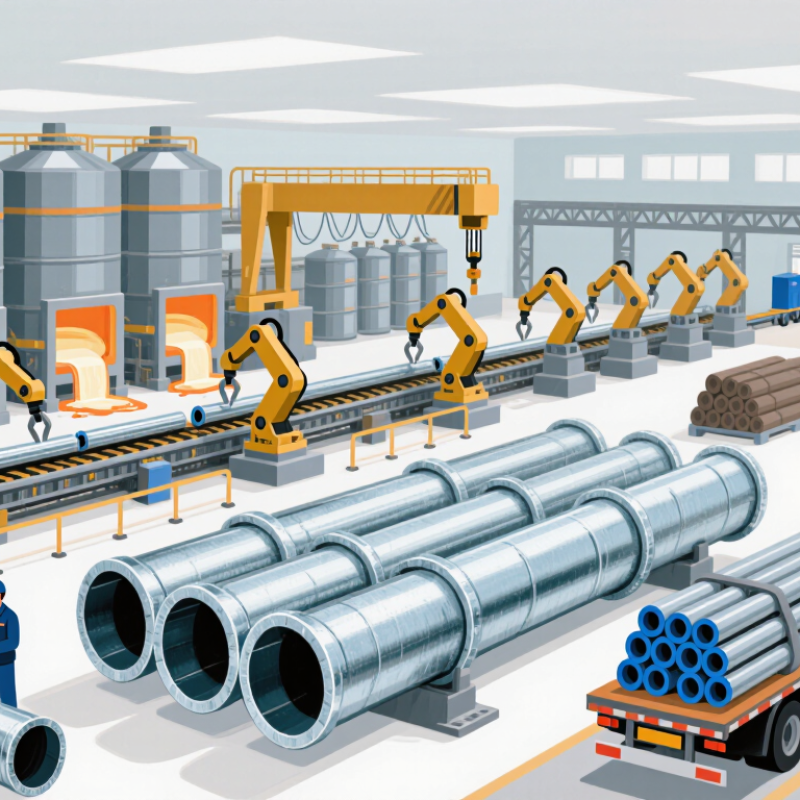
Galvanized steel pipe is carbon steel protected by a zinc coating. Manufacturers usually apply zinc through hot-dip galvanizing. The coating creates a physical barrier against moisture and corrosion. Zinc also offers sacrificial protection when small scratches expose the steel. A cut end still needs attention.
For water supply, pipe selection depends on pressure, water chemistry, temperature, and installation conditions. ASTM A53 and ASTM A795 are common standards for steel pipe applications. Potable-water systems may also require certification under NSF/ANSI/CAN 61 or an equivalent local standard.
2.2 billion people
The World Health Organization and UNICEF reported that 2.2 billion people lacked safely managed drinking water in 2022.
US$2.5 trillion
The NACE IMPACT study estimated global corrosion costs at about US$2.5 trillion annually, equal to roughly 3.4% of global GDP.
Reliable pipework remains a practical infrastructure need. Galvanizing can reduce maintenance exposure, but it does not remove every risk. Very soft, acidic, or highly alkaline water may attack zinc faster. Internal deposits can also reduce the effective diameter, especially in older lines.
During inspection, check coating thickness, threaded joints, cut ends, and visible rust near supports.
A supplier should provide mill certificates, coating records, dimensional data, and pressure-test results. Galvanized steel is useful, but treating it as universally suitable would be a weak engineering decision.
Water pipe selection begins with the service, not the catalogue. For potable water, buyers commonly check ASTM A53/A53M for steel pipe requirements, ISO 1461 for hot-dip galvanized coatings, and NSF/ANSI/CAN 61 for drinking-water contact materials. Regional rules still differ. A pipe accepted for irrigation may fail a potable-water approval review.
Dimensions need equal attention. Confirm nominal pipe size, outside diameter, wall thickness, length tolerance, and threaded or grooved ends. ASTM A53/A53M covers chemical composition, tensile properties, hydrostatic testing, and inspection requirements. Ask for heat numbers and mill test certificates. Traceability matters. Small paperwork gaps can become large site problems.
Corrosion protection should match the water chemistry. The NACE IMPACT study estimated global corrosion costs at about US$2.5 trillion annually, or 3.4% of global GDP. That figure covers many sectors, but it shows why coating control is not cosmetic. Inspect zinc coating continuity, adhesion, and damaged areas after handling. Galvanized steel is practical, yet not universally ideal. Very soft water, extreme pH, or stagnant sections may accelerate deterioration. The WHO Guidelines for Drinking-water Quality also stress material safety and water-quality control. Supplier audits should include factory inspection, independent testing, and batch-level records. Standards help, but they do not replace engineering judgment.
Reliable Chinese suppliers serve municipal water projects, building plumbing, farms, and industrial facilities. Their product ranges often include threaded, grooved, and plain-end galvanized steel pipes. Common sizes run from small household lines to large water-main sections. Experienced suppliers should provide mill certificates, coating records, dimensional reports, and traceable batch numbers. Hot-dip galvanizing protects the steel with a durable zinc layer, but coating thickness still requires independent verification. A bright surface alone proves very little.
Tips: Request samples before ordering. Check zinc coating thickness, wall dimensions, weld quality, and end protection. Confirm whether the pipe suits potable water contact. Ask for inspection photos, pressure-test results, and packing details. Small details matter.
Supplier evaluation should include factory capability, production equipment, export experience, and response quality. A dependable manufacturer explains tolerances clearly instead of promising everything. Third-party inspection can verify diameter, length, coating adhesion, and leakage resistance before shipment. Packaging also deserves attention; plastic caps and strong bundles help prevent thread damage and wet storage stains. Buyers sometimes focus too heavily on price. That mistake can create higher installation costs later. I would also compare delivery records, replacement procedures, and technical support. No supplier is perfect, and unclear specifications often cause avoidable problems. Get every requirement written down.
Choosing a Top Galvanized Steel Pipe Supplier for Water
Evaluating a galvanized steel pipe supplier requires more than comparing prices. A reliable supplier should show clear control over steel sourcing, pipe forming, welding, and zinc coating. Ask for recent inspection records, production photos, and certificates that match the actual shipment. Factory visits can reveal storage conditions, maintenance routines, and worker safety practices.
For water applications, check pipe dimensions, coating thickness, thread quality, and pressure performance. Request samples from different production batches. Independent testing can verify zinc adhesion, wall thickness, chemical composition, and hydrostatic strength. The zinc surface should look continuous, without bare spots, heavy drips, or deep scratches. Small details matter. A polished sample may not represent regular output.
Manufacturing capacity also deserves close attention. Review the number of forming lines, daily output, shift schedules, and backup equipment. Confirm whether the supplier can maintain quality during peak orders. Ask how raw materials and finished pipes are tracked by batch. A supplier with large equipment may still lack effective process control. That weakness is easy to miss. Delivery records, corrective-action reports, and customer references often provide more useful evidence than a factory presentation. Some evaluations also overlook packaging; damaged ends can create problems before installation begins.
The chart shows the minimum average zinc coating thickness specified by ISO 1461 for galvanized steel articles across different steel thickness ranges. When evaluating a galvanized steel pipe supplier, compare coating test reports, dimensional consistency, production-line capability, batch traceability, and compliance with the required standard. Higher coating thickness can improve corrosion protection, but the correct requirement depends on the product specification and steel thickness.
Reference: ISO 1461 minimum average coating thickness values. Actual pipe requirements may also be governed by project specifications, ASTM, EN, or other applicable standards.
Selecting galvanized steel water pipes starts with the water, not the catalogue. WHO/UNICEF’s JMP 2023 report says 2.2 billion people lacked safely managed drinking water in 2022. That figure makes reliability more than a price issue.
Test pH, chloride, hardness, temperature, and flow velocity before ordering. Water chemistry matters. Aggressive water can consume zinc faster, even when the coating looks uniform.
Match nominal diameter, wall thickness, working pressure, and joint type to the design drawings. Request mill certificates, coating thickness records, hydrostatic test results, and traceable batch numbers. ASTM A53 and ISO 1461 can help define pipe and zinc-coating requirements. Local potable-water approval remains essential. AWWA guidance also emphasizes corrosion control and material compatibility in drinking-water systems.
Check fittings too. A compliant pipe connected to unsuitable valves can still create a weak section.
During supplier evaluation, compare landed cost, not only the factory quotation. Include freight, inspection, threading, packaging, replacement risk, and installation labor. The World Bank’s 2006 report, The Challenge of Reducing Non-Revenue Water in Developing Countries, places typical water losses around 25–50% in many developing utilities. Conditions vary widely.
Leakage is not always a pipe failure; poor joints and inaccurate measurements matter. Ask for sample inspection and independent testing for large orders. I would not accept vague coating claims.
Stored pipes also need dry, ventilated protection, because trapped moisture can produce white rust before installation.