The Duravant family of operating companies serve the food processing, packaging and material handling segments.

Choosing the right Powder Feeder can determine whether a production line runs smoothly or struggles with inconsistent dosing. Powders differ widely in density, moisture, particle size, flowability, and electrostatic behavior. A material that moves easily through a hopper may bridge inside another feeder within minutes. That difference matters.
This guide examines the top types of powder feeders used in food processing, pharmaceuticals, chemicals, minerals, and advanced manufacturing. It considers screw feeders, vibratory feeders, rotary feeders, pneumatic systems, volumetric feeders, and gravimetric loss-in-weight designs. Each option has practical strengths and limits. Some provide steady throughput, while others offer better accuracy under changing bulk density. The best choice depends on the powder, target rate, cleaning requirements, available space, and control system.
Details matter here. A twin-screw feeder may handle cohesive powders better than a single screw. A vibratory unit can provide gentle movement, yet it may struggle with damp materials. Gravimetric control often improves accuracy, but it usually requires more sensors, calibration, and maintenance. These trade-offs are easy to overlook. Even experienced engineers can select an unsuitable design when laboratory results replace real production testing.
The following overview combines established feeder principles with practical selection factors. It also recognizes an important limitation: no single Powder Feeder performs perfectly for every application. Careful trials, reliable data, and honest evaluation remain essential before installation.
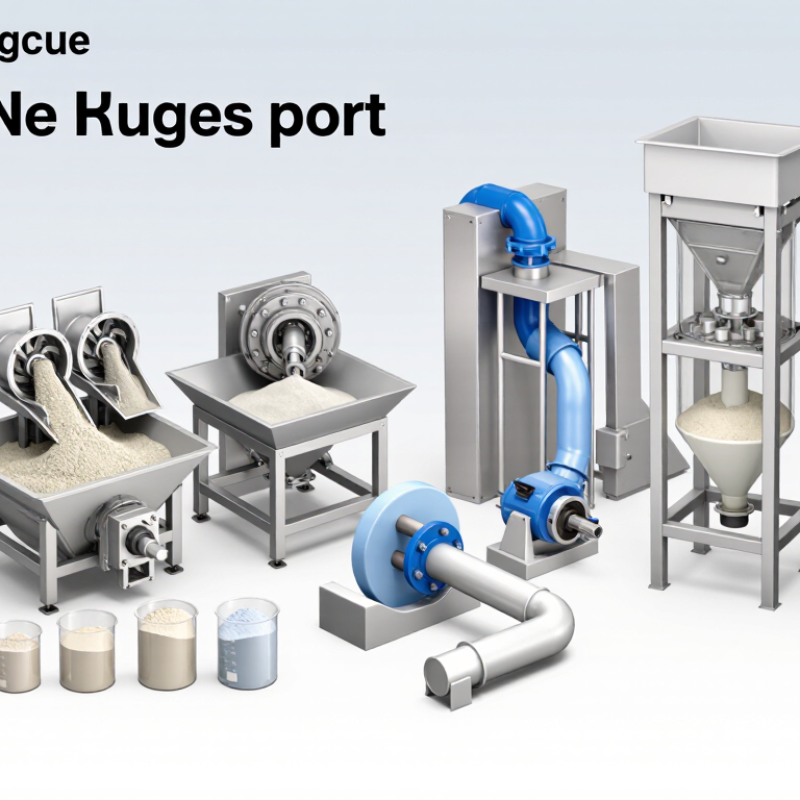
A powder feeder meters dry material from a storage vessel into a process line.
It controls flow more carefully than a simple discharge valve. Inside, an agitator may loosen powder, while a screw, vibratory tray, or rotating disk moves it forward. The outlet then delivers a measured stream to a mixer, reactor, press, or packaging machine.
The main types include screw feeders, vibratory feeders, rotary feeders, and loss-in-weight feeders. Screw feeders use a rotating auger and suit many powders with stable flow behavior. Vibratory feeders move material through controlled vibration and can handle gentle, intermittent dosing.
Rotary feeders use pockets or cavities to transfer repeated volumes. Loss-in-weight feeders monitor the hopper and feeder together, calculating flow from weight changes over time. They often provide stronger accuracy, but calibration and stable mounting matter.
Powder behavior decides more than the equipment label. Fine particles may bridge above the outlet. Damp material can cling to metal surfaces. A fast screw does not always create a faster reliable feed. Operators should test bulk density, moisture, particle size, and flow consistency before selecting a feeder. Small changes can matter.
One assumption deserves questioning. A feeder that works well at full capacity may perform poorly near its minimum rate. Regular checks of screw wear, vibration, load cells, and hopper buildup help reveal this weakness. The best setup is not always the most complex one. It is the one that delivers steady powder under real operating conditions.
Powder feeders are selected by how accurately, gently, and consistently they move dry materials.
The main types are volumetric, gravimetric, screw, rotary, and vibratory feeders. Each solves a different process problem.
Volumetric feeders deliver powder by measuring volume per rotation. They are simple and economical, but bulk density changes can reduce accuracy.
Screw feeders use an auger inside a tube. They suit flour, mineral powder, and other materials requiring controlled transfer.
Vibratory feeders move powder through short, adjustable pulses. They are useful for fragile or free-flowing materials, although sticky powders may bridge above the tray.
Rotary feeders handle steady discharge from bins and hoppers. They are practical for continuous systems, but poor sealing can cause dust leakage.
Gravimetric feeders measure actual mass, often through loss-in-weight control. This method compensates for density changes and supports precise blending.
A 2024 Grand View Research report valued the global powder-handling equipment market at several billion dollars and projected continued growth through 2030.
The report links demand to stricter process control in food, pharmaceutical, and chemical production. A recent industry survey published by Powder and Bulk Solids also identifies flow consistency and dust control as leading equipment concerns.
In practice, “most accurate” is not always “best.”
A screw feeder may compact a cohesive powder. A vibratory unit may underfeed when humidity rises.
Testing with the real material remains essential. Small errors become expensive at high throughput.
What Are the Top Types of Powder Feeders?
How Do Different Powder Feeder Designs Compare?
Powder feeder performance depends on flowability, density, moisture, and target accuracy. Volumetric screw feeders suit steady materials with consistent bulk density. Their output changes when the powder compresses or absorbs moisture. Loss-in-weight feeders measure hopper weight continuously. This design corrects density changes and often achieves ±0.5% accuracy under controlled conditions. That figure is commonly reported in industrial application data, but real results vary.
Vibratory feeders handle fragile powders gently and create less shear. However, cohesive powders may bridge above the tray. Rotary feeders offer simple, repeatable dosing for free-flowing materials. They can struggle with very light powders or irregular particles. USP General Chapter <1174> and ASTM powder-flow methods emphasize testing before equipment selection. A Carr Index above 25 often signals poor flow, although this threshold is not universal. Feeder selection still involves judgment.
Tips: Test the actual powder, not a substitute. Record bulk density before and after vibration. Check feed accuracy at low, medium, and maximum rates. Inspect the discharge zone for ratholing. Small errors matter. One practical weakness remains: laboratory flow tests may not reproduce plant humidity, vibration, or operator adjustments. Recheck performance after installation, especially when particle size changes.
How do different powder feeder designs compare?
Scores use a comparative 1–5 engineering scale, where 5 indicates a stronger typical capability. Gravimetric loss-in-weight feeders generally provide the best control for accurate, continuously adjusted dosing, while screw feeders offer broad material and rate flexibility. Vibratory feeders are effective for free-flowing powders, and rotary valves are commonly selected for steady transfer with simpler mechanical operation. Actual performance depends on powder properties, feed rate, equipment sizing, and calibration.
Choosing a powder feeder starts with the material, not the machine catalogue.
Fine powders may bridge, cake, or behave like a liquid. Cohesive powders often suit loss-in-weight or twin-screw systems with agitation. Free-flowing granules may work well with volumetric or vibratory feeders.
That distinction matters. A feeder must deliver a stable rate despite changes in bulk density. Ask how the powder behaves after storage, vibration, and humidity exposure.
Accuracy is only one factor. Check the required feed range, turndown ratio, refill frequency, and response time. A laboratory process may need gentle, low-rate dosing. A continuous production line may need stronger throughput and automatic replenishment.
Consider contact materials, cleanability, dust control, and access for inspection. Small dead zones can hold residue. They can also distort the next batch. Safety interlocks and enclosed transfer paths deserve equal attention.
Run a trial with the actual powder whenever possible. Test startup, stopping, refill, and low-level operation. Measure short-term variation and longer drift.
A feeder that performs well for ten minutes may wander after an hour. It is tempting to choose the most precise option, but unnecessary complexity can increase maintenance.
Conversely, a cheap volumetric unit may struggle when density changes. No selection is perfect. Document assumptions, including moisture and particle size, then challenge them before purchase. That step is often skipped.
Powder feeders are used wherever dry materials must move at a controlled rate. Common locations include pharmaceutical rooms, food plants, chemical facilities, plastics lines, and construction-material factories. Each site has different handling risks. Fine powders may float like smoke, while damp powders can form hard lumps.
Screw feeders are common for steady dosing into mixers, reactors, and tablet-production equipment. Vibratory feeders suit free-flowing powders that need gentle movement. Loss-in-weight feeders measure material consumption continuously and support accurate formulation control. However, accuracy depends on more than feeder type. Operators must check moisture, particle size, bulk density, and bridging inside the hopper. Small changes matter.
In food processing, feeders deliver flour, starch, cocoa, salt, and powdered additives. Pharmaceutical production requires careful control, cleanable surfaces, and documented calibration. Chemical plants often use feeders for pigments, minerals, and processing agents. Plastic manufacturers dose powders into extrusion or blending systems. Construction sites use them for cement, lime, and dry mortar ingredients.
Real installations are rarely perfect. A feeder may perform well during a factory test but struggle with humid air. That lesson is easy to miss. Experienced technicians watch the discharge pattern, listen for unusual vibration, and record weight changes over time. Regular checks help reveal blocked outlets, worn screws, or inaccurate load cells before production quality changes.
| Powder Feeder Type | Operating Principle | Typical Feeding Accuracy | Best-Suited Powder Characteristics | Common Applications | Key Advantages | Typical Rating |
|---|---|---|---|---|---|---|
| Loss-in-Weight Feeder | Continuously measures the reduction in hopper weight and adjusts the feed rate to maintain the target output. | High; often suitable for precise continuous dosing when properly calibrated. | Fine powders, cohesive powders, powders with variable bulk density, and materials requiring accurate formulation. | Polymer compounding, plastics processing, chemical production, food ingredients, pharmaceuticals, and battery-material processing. | Compensates for bulk-density changes and provides accurate mass-flow control. | ★★★★★ |
| Volumetric Screw Feeder | A screw or auger delivers a set volume of powder per rotation or unit of time. | Moderate; depends on stable bulk density and consistent powder flow. | Free-flowing or moderately cohesive powders with relatively stable physical properties. | Flour and starch handling, mineral processing, dry chemical dosing, animal feed, and general powder transfer. | Simple construction, economical operation, and easy rate adjustment. | ★★★★☆ |
| Gravimetric Feeder | Controls powder delivery by measuring mass flow directly or by combining weight measurement with controlled dosing. | High; designed for consistent mass-based dosing. | Powders or granules where formulation accuracy and batch-to-batch consistency are important. | Food and beverage production, pharmaceuticals, specialty chemicals, plastics, and nutraceutical manufacturing. | Accurate recipe control and reduced sensitivity to density variation compared with basic volumetric systems. | ★★★★★ |
| Vibratory Feeder | Controlled vibration moves powder along a tray or channel toward the discharge point. | Moderate; depends strongly on powder flowability and vibration stability. | Free-flowing, non-sticky powders, small particles, and materials that can be conveyed gently. | Food ingredient handling, packaging lines, chemical powders, ceramic materials, and laboratory-scale dosing. | Gentle handling, low mechanical wear, and suitability for relatively fragile particles. | ★★★☆☆ |
| Rotary Valve Feeder | Rotating pockets carry powder from an inlet to an outlet while providing controlled discharge and, in some systems, airlock separation. | Moderate; primarily used for controlled discharge rather than highly precise formulation. | Dry, free-flowing powders and bulk solids that can pass through rotating pockets without excessive bridging. | Pneumatic conveying, dust-collection systems, cement and minerals, grain processing, and industrial powder transfer. | Continuous operation, compact design, and ability to assist with pressure separation. | ★★★☆☆ |
| Pneumatic Powder Feeder | Uses air or another gas stream to transport and meter powder through conveying lines. | Moderate to high; depends on system design, air velocity, and powder properties. | Dry powders suitable for pneumatic conveying, including materials that need enclosed transfer. | Pharmaceutical manufacturing, food processing, chemical plants, additive handling, and centralized material-transfer systems. | Enclosed conveying, flexible routing, and reduced operator exposure to airborne dust. | ★★★★☆ |
| Belt Feeder | A moving belt carries powder from a hopper while belt speed controls the discharge rate. | Moderate; generally more suitable for bulk-rate control than ultra-precise dosing. | Free-flowing bulk powders and granular materials with moderate to large particle sizes. | Mining, aggregates, cement, fertilizer, biomass, and large-scale material handling. | Handles high throughputs and larger particle sizes with relatively simple maintenance. | ★★★☆☆ |
| Disc or Pocket Feeder | A rotating disc or pocketed rotor collects and releases measured portions of powder. | Moderate to high for portioned or batch feeding when the powder flows consistently. | Free-flowing powders, pellets, and materials requiring repeated portion delivery. | Batch blending, premix preparation, fertilizer production, ceramics, and specialty chemical processing. | Repeatable portioning, compact equipment footprint, and suitability for intermittent feeding. | ★★★★☆ |
Note: Actual feeding performance depends on powder cohesiveness, moisture content, particle-size distribution, bulk density, hopper design, feeder size, calibration, and process conditions.