

The Duravant family of operating companies serve the food processing, packaging and material handling segments.















Why Choose a Poly Pipe Cutter for Clean Pipe Cuts?
Clean pipe cuts are not merely cosmetic. They affect joint fit, sealing performance, and installation time. On irrigation, plumbing, and utility projects, a rough edge can leave plastic dust inside the line. It may also prevent fittings from seating evenly. A Poly Pipe Cutter offers a controlled alternative to improvised blades or abrasive tools. Its curved jaw supports the pipe while a hardened blade applies focused cutting pressure. The result is usually straighter, smoother, and easier to prepare for fittings.
Small details matter. Blade sharpness, pipe diameter, wall thickness, and operator pressure all influence the finished cut. Experienced installers often inspect the pipe before making a connection. They check for crushing, angled edges, burrs, and hidden deformation. This brief pause can prevent avoidable leaks and repeated work. Still, no cutter fixes poor technique. That limitation deserves honest attention.
A reliable cutting method begins with the tool’s rated capacity and the pipe manufacturer’s recommendations. Forcing an undersized cutter can damage both the blade and the pipe. Using excessive pressure may create an oval cut instead of a clean one. Even skilled workers sometimes rush this step. That is where mistakes begin. This introduction explores why a Poly Pipe Cutter supports cleaner results, faster preparation, and more consistent workmanship. It also considers practical limits, maintenance needs, and selection factors. The goal is not to praise one tool blindly. It is to understand when this cutter genuinely improves the work.
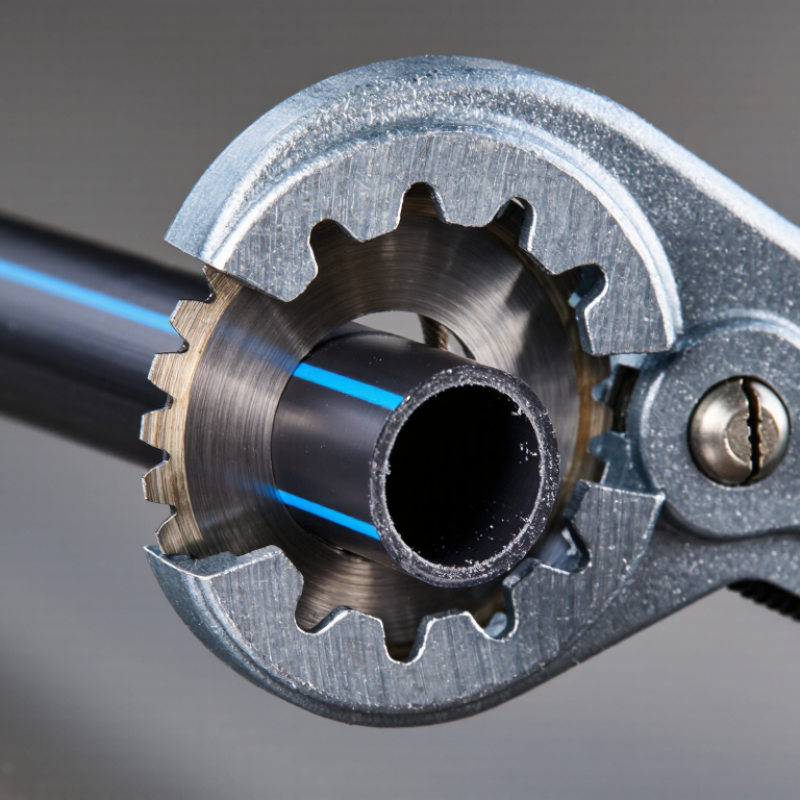
Table of Contents [Hide]
What Poly Pipe Cutters Are and How They Work
A poly pipe cutter is a hand tool designed to slice polyethylene pipe with a controlled, near-square cut. Its blade moves through the pipe wall while the pipe rests in a cradle or between supporting jaws. This support helps limit flattening and wandering. A ratcheting model advances the blade in short steps; a scissor-style model closes in one continuous motion. The basic aim is simple: keep the pipe steady and the blade sharp. Clean cuts matter.
The Plastics Pipe Institute’s Handbook of Polyethylene Pipe reports a thermal expansion coefficient of roughly 1.0 × 10⁻⁴ inches per inch per °F for PE. In practice, pipe can shift with temperature, so secure it before cutting rather than relying on a quick hand hold. After the cut, check the end for a slant, burrs, or a pinched shape. For heat-fusion joints, ASTM F2620 guidance calls for properly prepared pipe ends; a cutter helps, but it cannot replace inspection or end preparation. One small caveat: even a good tool can leave a poor cut when its blade is dull or the pipe is unsupported.
Why Choose a Poly Pipe Cutter for Clean Pipe Cuts? - What Poly Pipe Cutters Are and How They Work
| Cutter Type | How It Works | Typical Pipe Use | Cut Quality | Practical Considerations |
|---|---|---|---|---|
| Ratchet cutter | A blade advances through the pipe in stages as the handles are squeezed. | Many small- to medium-diameter plastic pipes, within the tool’s rated capacity. | Can produce a square, clean cut when the pipe is supported and the blade is sharp. | Requires less continuous hand force than a simple shear; check the stated pipe-size and material limits. |
| Scissor-style shear | Two blades or a blade and an anvil close across the pipe in one squeezing action. | Small-diameter, relatively thin-walled plastic tubing and pipe, depending on the cutter design. | Usually neat when the pipe is held steady and the blade meets it at a right angle. | Best suited to sizes the tool can cut without crushing or excessive force. |
| Rotary pipe cutter | A cutting wheel rotates around the pipe while pressure is applied gradually. | Certain plastic pipes and tubing, when the cutter is specifically designed for that material and size. | Can make a controlled, even cut; the result depends on wheel condition and correct alignment. | Not every rotary cutter is suitable for polyethylene pipe; confirm compatibility before use. |
| Hand saw with a guide | A fine-toothed saw cuts through the pipe, ideally against a square guide or in a miter box. | Pipe sizes that exceed a hand cutter’s capacity or situations where a suitable saw is available. | Can be square with careful guiding, but may leave burrs or a rough edge that needs finishing. | Secure the pipe to prevent movement and remove loose burrs without damaging the pipe wall. |
| Why a dedicated poly pipe cutter? | Its cutting mechanism is made for plastic pipe and can help control the cut when used within its rated range. | Polyethylene pipe sizes and wall thicknesses specified by the cutter manufacturer. | A clean, square end helps prepare pipe for joining; it does not replace the fitting’s installation requirements. | Choose by pipe material and outside diameter, keep the blade sharp, and follow the pipe and fitting instructions. |
Cutting results vary with pipe size, wall thickness, tool condition, and technique. Support the pipe, cut square to its axis, and prepare the end as required by the pipe or fitting manufacturer.