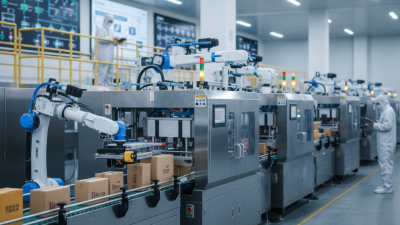
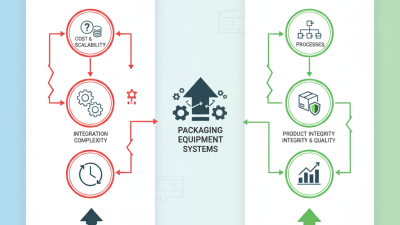
The Duravant family of operating companies serve the food processing, packaging and material handling segments.

Global buyers entering 2026 face a wider choice of packaging systems than ever before. Cartoning lines, flexible packaging machines, case packers, palletizing cells, and intelligent automation now serve different products and markets. A chilled-food producer may need hygienic stainless-steel equipment, while an electronics exporter may prioritize cushioning, traceability, and moisture control. The right choice depends on product sensitivity, production volume, labor availability, shipping conditions, and market expectations.
Walter Soroka, a respected packaging educator and author, defines packaging as “the science, art, and technology of enclosing and protecting products.” That principle remains practical today. Effective packaging systems must protect goods, support efficient handling, and present reliable information at every distribution stage. They should also reduce material waste without weakening product safety or shelf performance. Small details matter, such as seal strength, barcode readability, changeover time, and carton compression. A fast machine is not always the best investment.
This guide reviews the top packaging systems for global buyers in 2026. It compares their operating strengths, limitations, maintenance needs, and suitability for different industries. Some categories overlap, and no universal ranking exists. That is an important limitation. A system performing well in a high-volume factory may struggle with short production runs or frequent format changes. Buyers should request validated samples, inspect service support, and test complete packaging lines before committing. The smartest decision is rarely the newest one. It is the system that performs consistently, scales responsibly, and fits real working conditions.

2026 Top Types of Packaging Systems for Global Buyers
Packaging Systems: Definition, Purpose, and Core Components
A packaging system is an integrated method for containing, protecting, labeling, and moving a product. It includes materials, equipment, operators, quality checks, and supporting data. The system may handle bottles, cartons, pouches, cases, or mixed formats. Its purpose extends beyond appearance. It should reduce damage, control contamination risks, support efficient handling, and maintain product identity through distribution.
Core components usually include primary packaging, secondary packaging, and tertiary packaging. Primary packaging touches the product, such as a sealed container or flexible pouch. Secondary packaging groups individual units for storage and retail handling. Tertiary packaging supports transport, often through cases, pallets, and protective materials. Machinery may include fillers, sealers, labelers, printers, inspection devices, and case packers. Controls and sensors help maintain consistent speed, weight, seals, and coding. In plant evaluations, compatibility is often overlooked. A fast machine can still underperform when materials vary between suppliers.
Tips: Confirm product dimensions, material behavior, line speed, cleaning needs, and maintenance access before purchasing. Request realistic trial runs. Test damaged or irregular materials too. They reveal weaknesses quickly.
Global buyers should also review operator training, spare-part availability, energy use, and documentation. Local conditions matter. Humidity, dust, voltage, and transport distances can change performance. Sustainability deserves careful measurement, not vague promises. Less material may reduce waste, but it can weaken protection. A balanced system protects the product without creating unnecessary complexity. Even experienced teams should reassess assumptions after installation. Real production rarely behaves exactly like a proposal.
Primary packaging systems are the first barrier between a product and its environment. They also shape the customer’s first physical impression. For global buyers, suitable options include bottles, jars, tubes, pouches, trays, and sealed cartons. Each system should match the product’s texture, sensitivity, filling process, and expected handling conditions.
Protection comes before decoration. A light-sensitive formula may need an opaque container, while a moisture-sensitive product requires a dependable seal and low-permeability material. Closures matter too. A loose cap can cause leakage, contamination, and costly returns. In practical evaluations, buyers should inspect drop resistance, seal integrity, dispensing accuracy, and label adhesion under changing temperatures.
Small details matter.
Presentation still influences trust. Clear containers can show color and fill level, but they may expose contents to light. Pumps offer controlled dosing, while wide-mouth jars allow easy access but increase contact with air and hands. Materials should support recycling goals where local systems can process them. That point is often overlooked. A technically recyclable package may still fail in real collection networks.
Reliable sourcing requires documented specifications, batch records, migration testing when relevant, and samples from actual production lines. Suppliers should explain tolerances, closure compatibility, and storage limits without hiding weaknesses. No packaging system is perfect. A design that looks elegant may feel awkward in daily use. Buyers should test the complete package with the real product, not an empty sample.
Secondary packaging systems connect individual products into manageable units for storage, transport, and retail presentation. In 2026, global buyers are comparing cartons, shrink bundling, trays, and reusable cases against handling speed and material use. A practical evaluation starts with product dimensions, stacking pressure, climate exposure, and distribution steps. During warehouse trials, I would check whether operators can lift each bundle without twisting their wrists. Small details matter. A loose carton can shift on a pallet, while tight wrapping may damage labels or corners.
Grouping equipment should match line speed and product variation. Automatic case packers suit stable, high-volume formats. Flexible collating systems help facilities manage frequent changeovers. Sensors can verify counts, orientation, and closure quality before products leave the line. For manual operations, clear guides and consistent bundle weights reduce mistakes. Branding also belongs in the engineering discussion. Printed cartons, sleeves, and controlled label placement create a clean shelf block without hiding required information. Strong color contrast improves recognition, but excessive graphics may increase printing complexity and waste.
Handling performance depends on more than packaging strength. Buyers should request drop, compression, vibration, and humidity tests using realistic routes. Reusable secondary containers may reduce waste, yet cleaning, reverse logistics, and loss rates need honest measurement. I have seen attractive systems underperform because empty packaging occupied too much storage space. That weakness deserves attention. Specifications should record recycled content, recyclability, worker access, machine settings, and inspection frequency. Suppliers who share test conditions and limitations are easier to assess, even when their solution is not perfect.
The chart compares common secondary packaging systems by the number of packaging functions they typically support: grouping products, improving handling efficiency, protecting goods during distribution, and providing branding space. The scores are a practical planning benchmark rather than market-share data, since the best solution depends on product size, channel requirements, automation, and regional recycling infrastructure.
Tertiary packaging protects grouped products during warehouse moves, container loading, and long export routes. Typical systems combine pallets, stretch film, strapping, edge protectors, corrugated cases, and reusable crates. Selection depends on load weight, stacking height, humidity, handling equipment, and destination. Smithers’ 2024 market research projects the global corrugated packaging market will exceed US$205 billion by 2029. This growth reflects continuing demand for efficient outer cases across distribution networks.
UNCTAD’s Review of Maritime Transport reports that maritime shipping carries over 80% of world merchandise trade by volume. Export packaging must therefore survive vibration, compression, salt air, and repeated transfers. ISO 780 handling marks and ISO 3394 dimensional guidance can improve warehouse consistency, but they do not replace performance testing. ISTA-style distribution tests help reveal weak corners before shipment. Still, one design rarely fits every route. Moisture is often underestimated.
Tips: Test a fully packed pallet at its maximum height. Measure compression, film tension, pallet stability, and corner damage. Ask logistics partners for actual handling data. Use barriers or desiccants when humidity risks are high. A lighter package may reduce material costs, yet an over-light design can create hidden losses through crushed cartons, repacking, and delayed export clearance. Reusable systems may perform well, but return logistics must be measured honestly.
| Tertiary Packaging System | Primary Function | Typical Materials | Typical Load or Capacity | Best-Fit Applications | Export and Handling Benefits | Important Selection Criteria |
|---|---|---|---|---|---|---|
| Wooden Pallet System | Unitizes cartons, drums, sacks, and intermediate loads for forklift and pallet-jack movement. | Sawn timber, plywood blocks, nails, and heat-treatment markings where required. | Common footprint: 1,200 × 1,000 mm or 1,200 × 800 mm; capacity depends on design, deck configuration, and load distribution. | General cargo, machinery, food ingredients, chemicals, and export shipments. | Widely available, repairable, stackable when properly designed, and compatible with common warehouse equipment. | ISPM 15 compliance for international wood packaging, moisture content, static and dynamic load ratings, and four-way entry requirements. |
| Plastic Pallet System | Provides a reusable, hygienic platform for repeated internal and cross-border distribution cycles. | High-density polyethylene or polypropylene, often molded with reinforced runners. | Common footprints include 1,200 × 1,000 mm and 1,200 × 800 mm; rated capacity varies substantially by rack, floor, and dynamic conditions. | Food, pharmaceuticals, electronics, automotive parts, and closed-loop supply chains. | No phytosanitary treatment is normally required; resistant to moisture, washdown, and many repeated handling cycles. | Material traceability, temperature performance, rack compatibility, repairability, nesting ratio, and end-of-life recyclability. |
| Corrugated Pallet and Sleeve System | Combines a fiber-based pallet with a corrugated sleeve or bulk box for lightweight unit loads. | Double-wall or triple-wall corrugated fiberboard, paper pallet components, and optional protective inserts. | Capacity is determined by board grade, stacking height, humidity, and pallet geometry; generally suited to light- and medium-duty loads. | Consumer goods, agricultural products, spare parts, retail replenishment, and one-way export shipments. | Low tare weight, flat-pack efficiency, easy recycling in established paper streams, and reduced wood-compliance concerns. | Humidity exposure, compression strength, puncture resistance, stacking duration, and compatibility with automated conveyors. |
| Rigid Intermediate Bulk Container System | Holds and protects large quantities of liquids, powders, granules, or semi-solids in a standardized transport unit. | Plastic inner bottle, galvanized or coated metal cage, pallet base, valve, and cap. | Common nominal volume: approximately 500–1,000 litres; the exact rating depends on contents and container specification. | Chemicals, edible liquids, lubricants, agricultural products, detergents, and industrial ingredients. | Efficient volume utilization, forklift access, stackability when approved, and simplified bulk dispensing. | UN performance certification for dangerous goods, compatibility with the product, valve protection, cleaning status, and closure integrity. |
| Steel Drum and Palletized Drum System | Provides robust containment for liquids, powders, and hazardous materials during long-distance distribution. | Carbon steel or stainless steel drum, closures, fiberboard or plastic separators, and a pallet or cradle. | Common drum sizes include approximately 200–220 litres, subject to regional standards and product requirements. | Petrochemical products, coatings, solvents, powders, food ingredients, and hazardous liquids. | High puncture resistance, strong stacking performance, and suitability for demanding maritime and intermodal routes. | UN packaging group, corrosion protection, bung and flange design, leakage prevention, weight distribution, and securing method. |
| Folding Bulk Bin System | Supports reusable or collapsible handling of packaged components and bulk materials in warehouse loops. | Foldable steel, aluminum, or reinforced plastic panels with a removable base and optional lid. | Typical working volumes range from several hundred litres to around one cubic metre, depending on design. | Automotive parts, industrial components, textiles, agricultural produce, and reusable distribution programs. | Collapses when empty, reducing return-transport volume; offers protection against crushing and repeated handling damage. | Folded height, panel strength, hygiene requirements, repair process, nesting efficiency, and compatibility with forklifts or pallet jacks. |
| Export Crate and Case System | Protects high-value, heavy, oversized, or sensitive goods from impact, vibration, moisture, and rough handling. | Heat-treated timber, plywood, steel fasteners, barrier film, desiccants, cushioning, and blocking materials. | Built to order; capacity is governed by product mass, center of gravity, lifting points, and transport mode. | Industrial machinery, electrical equipment, laboratory instruments, construction parts, and project cargo. | High mechanical protection and adaptable internal blocking for sea freight, air freight, road, and rail transport. | ISPM 15 status, shock and vibration control, corrosion prevention, lifting and lashing points, inspection access, and container fit. |
| Stretch-Wrapped Unit Load System | Stabilizes cartons or containers on a pallet and limits dust, shifting, and minor moisture exposure. | Machine-grade or hand-applied stretch film, corner boards, top sheets, and optional strapping. | Designed around the pallet load; performance depends on film gauge, containment force, load shape, and wrapping pattern. | Fast-moving consumer goods, cartons, packaged food, paper products, and general warehouse shipments. | Fast application, transparent load visibility, low material weight, and improved unit-load stability. | Film pre-stretch, recycled content, puncture resistance, containment force, exposure to heat, and compatibility with recycling systems. |
| Strapped and Edge-Protected Load System | Compresses and secures heavy or rigid loads that require stronger restraint than film alone can provide. | Polyester or polypropylene strapping, steel strapping for demanding loads, buckles, seals, and fiber or plastic edge protectors. | Load rating depends on strap width, tensile strength, number of straps, friction, and product geometry. | Bricks, tiles, timber, metal products, machinery, building materials, and dense pallet loads. | Improves resistance to shifting and toppling during vibration, braking, acceleration, and container handling. | Strap tension, edge-crush protection, load compression tolerance, abrasion resistance, and compliance with transport securing procedures. |
| Desiccant and Barrier-Packaging System | Controls humidity and corrosion risk inside crates, cases, containers, or sealed unit loads. | High-barrier laminated film, vapor-corrosion-inhibiting materials, desiccant packets, humidity indicators, and heat seals. | Protection period depends on internal volume, climate, seal quality, moisture load, and selected desiccant quantity. | Metal machinery, electronics, tools, spare parts, military-related equipment, and long-duration ocean export. | Reduces condensation and atmospheric corrosion during extended storage and sea transport when correctly engineered. | Barrier performance, seal integrity, product compatibility, climate route, moisture calculation, inspection method, and disposal requirements. |
| Container Lashing and Dunnage System | Prevents cargo movement inside shipping containers, trailers, rail wagons, and other transport units. | Timber blocking, inflatable dunnage bags, web lashings, chains, anti-slip mats, airbags, and load bars. | Selected according to cargo mass, friction coefficient, acceleration forces, container geometry, and route conditions. | Palletized cargo, rolls, machinery, drums, bags, boxed goods, and mixed-load export containers. | Reduces sliding, tipping, and impact damage during ocean, road, rail, and intermodal transportation. | Load distribution, lashing capacity, contact pressure, container floor limits, moisture exposure, and applicable cargo-securing guidance. |
Note: Load capacities and performance vary by design, material grade, product properties, handling equipment, climate, and transport conditions. Dangerous-goods packaging should be selected and tested according to the applicable UN, modal, and destination-country requirements.
Global buyers select packaging systems by matching protection needs with the realities of each supply chain. A sea shipment may face humidity, vibration, and long storage periods. Buyers often choose moisture-resistant outer packaging, reinforced corners, and internal cushioning. Air freight usually requires lighter structures. Weight matters there. For temperature-sensitive goods, insulated containers and monitored handling are important. The packaging must protect products without creating excessive disposal costs.
Warehouse operations also shape the decision. A system that fits standard pallets can reduce empty space and handling time. Buyers check whether workers can assemble it safely and whether automated equipment can process it consistently. They review compression tests, drop tests, transit simulations, and documented quality controls. Local recycling access matters too. A technically strong package may perform poorly if the destination cannot process its materials.
Experience shows that packaging decisions often change after real shipments. In one trial, a compact design reduced freight volume but slowed manual packing. That trade-off was underestimated. Buyers should compare total supply chain cost, not only the unit price. They should also test packaging across seasons, routes, and handling conditions. No system is perfect. A clear feedback process helps teams adjust dimensions, cushioning, labels, and closure methods before larger orders.