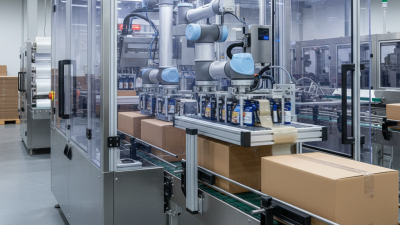
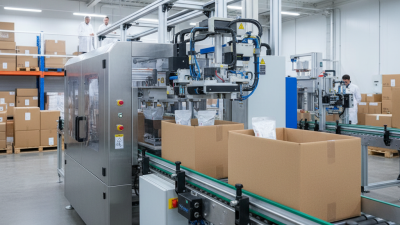
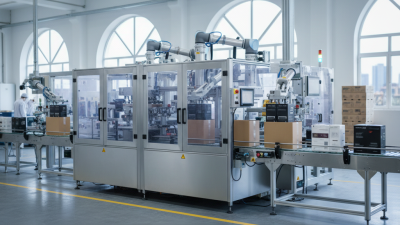
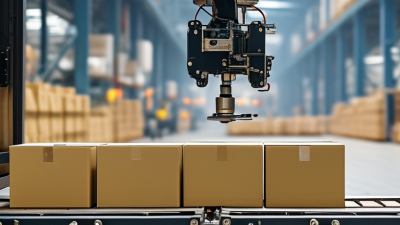
The Duravant family of operating companies serve the food processing, packaging and material handling segments.

Choosing the right case packer machine is not simply a matter of comparing speeds and prices. It is a production decision involving product protection, labor, floor space, maintenance, and future growth. PMMI industry reports consistently identify labor availability, automation investment, and flexible packaging formats as major concerns for manufacturers. Recent market analyses from Grand View Research and Mordor Intelligence also show continued growth in packaging automation, reflecting stronger demand for reliable, repeatable end-of-line systems.
A practical evaluation should begin with the product and case. Check container shape, weight, fragility, case dimensions, and required pack pattern. A fragile bottle may need controlled robotic placement, while sealed cartons may suit a faster continuous-motion system. Measure the available line space carefully. A machine that fits on paper may block access to conveyors, sensors, or maintenance panels. Small details matter. So does changeover time.
Ask suppliers for verified throughput under your actual conditions, not only laboratory speed. Request data for reject rates, compressed-air consumption, noise, operator access, and preventive maintenance. A case packer machine running at 20 cases per minute may be less valuable than one achieving stable output at 16. The cheapest quote can become expensive after repeated stoppages and difficult spare-parts sourcing. This is often underestimated.
Standards and service capability also deserve attention. Review guarding, electrical compliance, documentation, training, and remote-support options with qualified professionals. Pay attention to integration with the existing conveyor and palletizing system. A polished demonstration can hide awkward changeovers. Trial testing is essential. The right choice is rarely the most impressive machine; it is the one that performs reliably beside your real operators, products, and production targets.
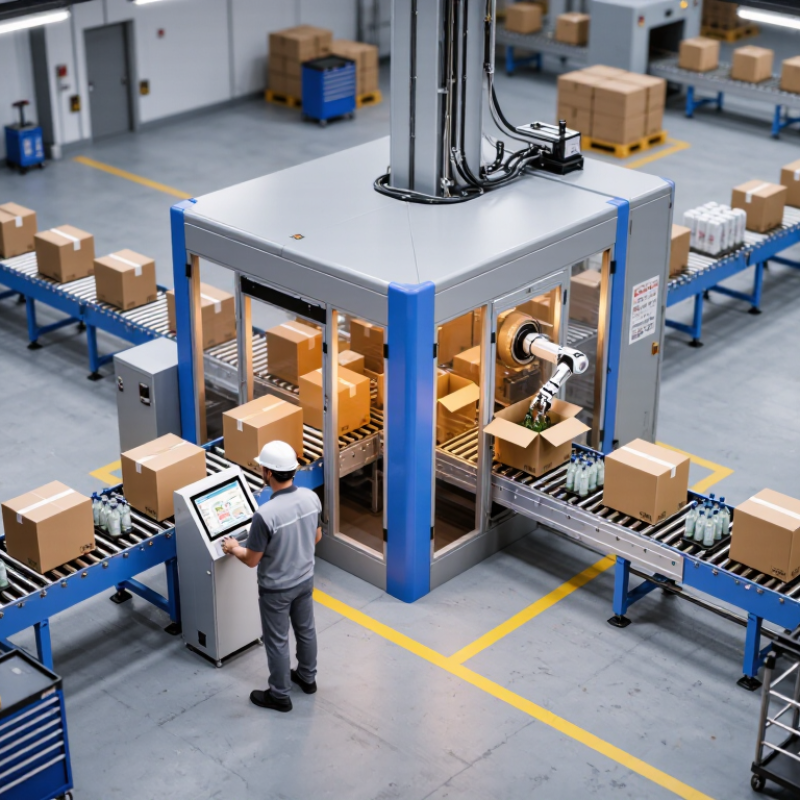
Choosing the right case packer machine starts with a measurable packaging brief. Define products, case dimensions, closure style, and target cases per minute. Record the smallest and largest pack, not only the average. Products may shift, deform, or arrive with uneven spacing. That detail matters. Set daily volume, operating hours, and acceptable downtime. A machine rated for peak speed can still disappoint when changeovers consume twenty minutes each hour. Use real production data whenever possible.
Review the actual line conditions. Measure conveyor height, available floor space, utilities, and operator access. Confirm whether cases are loaded by pick-and-place, robotic grouping, or continuous motion. Each method suits different product shapes and speeds. Fragile containers need controlled handling and gentle acceleration. Dusty areas may require easier cleaning and protected sensors. Include future products in the discussion, but avoid paying for capacity that may never be used. A modest buffer often proves more practical than an ambitious speed target.
Before approval, test representative products and packaging materials under normal conditions. Watch accumulation points, rejected cases, seal quality, and recovery after a stoppage. Ask for documented performance data, training arrangements, spare-part availability, and maintenance intervals. These checks support dependable decisions. I have seen teams trust a factory demonstration too quickly. It looked impressive. Their mixed-size cartons later caused repeated adjustments. That mistake was avoidable, though not entirely. Leave room for learning, because packaging requirements change after operators use the machine every day.
How to Choose the Right Case Packer Machine?
Choosing a case packer starts with the product, not the machine catalogue. I have seen fragile cartons damaged by excessive side pressure during high-speed packing. Top-load packers suit products that can be grouped from above. They handle bottles, trays, and irregular packs with flexible robotic or mechanical pickers. Their footprint can be compact. However, the loading cycle may become slower with unstable products.
Side-load packers push products horizontally into an open case. This method works well for cartons, bags, and tightly arranged multipacks. It often supports continuous movement and high output. The product must tolerate contact with guides and pushers. A slight size variation can cause jams. Wraparound case packers form the shipping case around the product group. They reduce separate case-forming steps, but precise carton feeding becomes essential.
Pick-and-place loading gives better control over fragile or mixed-pattern products. It also allows quick recipe changes when tooling is designed properly. Robotic loading may need more programming and maintenance knowledge. Mechanical loading is often simpler, but less adaptable. Consider speed, case dimensions, product stability, changeover time, and operator access. Test real samples, including damaged cartons and seasonal packaging. No machine wins every time. A rushed trial can hide problems that appear after eight hours of production. Ask for measurable results, such as jam frequency, loading accuracy, and changeover duration. I would also inspect cleaning points and sensor access before approving the final design.
Comparison of typical throughput ranges by case packer type and loading method. Actual performance depends on product size, pack pattern, case dimensions, and changeover requirements.
Drop packers and wrap-around packers are commonly selected for higher-speed standardized products, while side-load and robotic top-load systems are often preferred when product flexibility, gentle handling, or frequent format changes are more important.
How to Choose the Right Case Packer Machine?
Evaluate Machine Compatibility with Products and Cases
Choosing a case packer starts with the product, not the machine catalogue. The equipment must handle the product’s dimensions, weight, shape, and surface condition. Measure each product carefully, including height variations and flexible areas. A slippery bottle, soft pouch, or unstable carton may need different handling than a rigid container. Product orientation also matters. If items rotate during loading, the packer may create jams or damaged packaging.
Case dimensions require equal attention. Check the internal length, width, and height, not only the outside measurements. Confirm the case style, flap design, board strength, and required loading pattern. Small dimensional errors can cause crushed corners or incomplete closure. Throughput should be tested with real cases and products. A machine may meet its rated speed but perform differently with heavier or less uniform items.
Tips: Prepare production samples before requesting a trial. Test the smallest and largest products. Include cases from different approved suppliers. Watch product movement, case alignment, flap folding, and changeover time. Ask operators to inspect access points and cleaning requirements. A short trial is useful, but it cannot reveal every seasonal variation. I have found that perfect laboratory results may hide practical problems on a busy line. Leave reasonable tolerance in the final specification. Confirm the supplier’s testing records, adjustment range, and maintenance guidance before making a decision.
| Evaluation Dimension | Compatibility Check | Typical Product or Case Requirement | Compatibility Level | Selection Recommendation |
|---|---|---|---|---|
| Product Shape | Is the product rigid, stable, and easy to orient? | Rigid bottles, jars, cartons, cans, and trays generally provide stable handling surfaces. | High | Use standard robotic, pick-and-place, or intermittent-motion packing systems when the product maintains its shape during transfer. |
| Flexible Products | Can pouches, bags, or sachets be gripped without deformation? | Flexible packs may require vacuum tooling, servo-controlled side belts, product collation, or guided loading. | Conditional | Confirm material stiffness, seal location, surface finish, and allowable contact pressure before selecting the gripper or loading method. |
| Product Dimensions | Do product length, width, height, and weight stay within the machine's working range? | Dimensions should be measured at the largest and smallest production tolerances, including caps, closures, labels, and protective features. | High | Provide dimensional drawings and tolerance data. Select adjustable guides and tooling if multiple sizes will run on the same line. |
| Product Stability | Does the product remain upright and aligned during accumulation and loading? | Tall, narrow, top-heavy, or low-friction products are more likely to tip, rotate, or bridge during conveying. | Conditional | Evaluate conveyor pitch, side guides, divider plates, lane control, and the required product orientation before final machine selection. |
| Product Surface | Can the product tolerate contact with belts, vacuum cups, clamps, or pushers? | Glossy, dusty, wet, oily, textured, or easily scratched surfaces can affect grip and release performance. | Conditional | Request practical trials using production samples. Test vacuum hold, friction, scuffing, label adhesion, and product release. |
| Case Style | Is the case compatible with the selected loading and closing method? | Regular slotted cases are commonly used with top-load, side-load, and wraparound systems; other case styles may need dedicated tooling. | High | Match the case style with the machine architecture. Confirm flap geometry, panel dimensions, seam position, and case-opening behavior. |
| Case Board Quality | Does the corrugated board provide adequate stiffness and consistent forming? | Moisture, board caliper, flute structure, recycled content, and compression strength influence case erection and loading reliability. | Conditional | Test the lowest expected board quality, not only a new premium case. Include storage and environmental conditions in the trial. |
| Case Dimensions | Can the machine handle the full case size range? | Measure internal length, width, and depth after forming. Product clearance should allow loading without excessive compression or empty space. | High | Compare the complete case dimension range with the machine's adjustable guides, magazine, loading cell, and closing section. |
| Pack Pattern | Can the machine create the required count and arrangement? | Common patterns include single-layer rows, multiple layers, interlocked arrangements, and mixed-orientation packs. | High | Define the exact case count, layer count, orientation, dividers, pads, and required product presentation before requesting a quotation. |
| Throughput | Can the machine meet the required cases per minute with normal operating losses? | Required speed depends on product count per case, pack pattern, case handling time, changeovers, and upstream conveyor availability. | High | Compare sustained output rather than short demonstration speed. Include start-stop behavior, reject handling, and planned efficiency losses. |
| Changeover | Can operators switch products and case formats efficiently? | Format changes may involve guides, tooling, recipes, case magazines, pack patterns, and closing adjustments. | Conditional | Prefer recipe-based settings, clearly marked adjustment points, tool-less mechanisms, and repeatable position indicators for frequent changes. |
| Product Protection | Does the loading process prevent crushing, scuffing, leakage, or seal damage? | Fragile, filled, sealed, or temperature-sensitive products require controlled acceleration, gentle transfers, and suitable contact materials. | Conditional | Define acceptable product damage limits and validate them during a production-representative factory acceptance test. |
| Case Closure | Is the chosen sealing method suitable for the case and operating environment? | Tape, hot-melt adhesive, stitching, or other closure methods have different requirements for flap condition, dust, temperature, and compression. | High | Select the closure method according to distribution loads, storage conditions, recycling requirements, and required seal strength. |
| Line Integration | Can the case packer communicate and synchronize with upstream and downstream equipment? | Typical interfaces include conveyors, case erectors, sealers, checkweighers, palletizers, sensors, safety circuits, and plant controls. | High | Confirm line speed, product spacing, accumulation capacity, signal exchange, reject logic, utilities, and safety requirements during the design stage. |
| Hygiene and Environment | Can the machine construction withstand the operating and cleaning conditions? | Food, beverage, pharmaceutical, dusty, humid, or washdown areas may require appropriate stainless-steel construction, guarding, drainage, and ingress protection. | Conditional | Specify the hygiene zone, cleaning chemicals, washdown frequency, temperature, humidity, and applicable regulatory requirements before equipment design. |
Choosing the right case packer machine starts with your production targets, not a catalog photo. Measure current output, peak demand, and product changeover frequency. A machine rated for 20 cases per minute may struggle with unstable cartons or frequent stoppages. Leave practical capacity, usually 15–20 percent, for real operating conditions.
Space is equally important. Record ceiling height, aisle width, operator access, and maintenance clearance. A compact layout can become difficult when technicians need to open guards or replace belts. Automation should match your team’s skills. Automatic carton forming, product loading, and case sealing can reduce repetitive work, but each function adds controls and maintenance points. More automation is not always better.
Tips: Test actual products before purchase. Check fragile corners, loose packs, and different case sizes. Ask for changeover time, noise levels, cleaning access, and fault recovery details. Integration also deserves careful review. Confirm communication protocols, conveyor heights, sensors, safety circuits, and data requirements with your existing line. A machine may run well alone yet fail during handoff. I have seen small alignment differences create repeated jams. Plan a site test, and document every assumption. Some requirements will change after operators use the equipment. That is normal, but ignoring their feedback is expensive.
When selecting a case packer machine, safety should be tested on the factory floor, not only in a brochure. Check guarding, emergency stops, access doors, and sensor response during a real dry run. Operators should reach controls without leaning across moving parts. Ask for documented risk assessments, training records, and clear lockout procedures. Small gaps in training often create larger problems later.
Maintenance affects output as much as packing speed. Inspect whether belts, grippers, bearings, and sensors are easy to reach and replace. A machine that needs hours of disassembly for a ten-minute adjustment will quietly increase labor costs. Request preventive-maintenance intervals, spare-parts lists, and fault-code examples. I have seen teams underestimate cleaning time because demonstrations used empty cartons. Product dust and uneven cases can change that result.
Total cost includes installation, utilities, format changes, consumables, downtime, and technician travel. Compare expected expenses over several years, not just the purchase price. Supplier support matters when a line stops at 2 a.m. Confirm response times, remote diagnostics, on-site service, and operator training. Ask who supports the machine after commissioning. A vague answer deserves caution. One practical weakness remains: projected savings are never guaranteed. Test representative cartons and speeds, record rejects, and allow for maintenance delays. Reliable decisions come from measured trials, not confident promises.